The name Chablis is said to originate from the combination of two Celtic words: "cab" meaning "house" and "leya" meaning "near the wood". The region benefits from a thousand-year history, with its first vines dating back to Gaulish times. The village of Chablis itself was founded in Roman times. In 867, Benedictine monks fled the Loire Valley and settled here. They cultivated the vine, before the arrival of the Cistercian monks. The latter in turn played a great role in the development of the appellation and the classification of the finest terroirs.
Chablis wines then benefited from the proximity of the Yonne — a privileged access route to Paris before the advent of the railway — to be served at royal tables. In 1955, after the phylloxera crisis and two World Wars, the vineyard represented only 550 hectares. Thanks to the tireless work of winemakers, it extends today over 5,400 hectares, managed by a new generation knowing how to combine tradition and modernity.
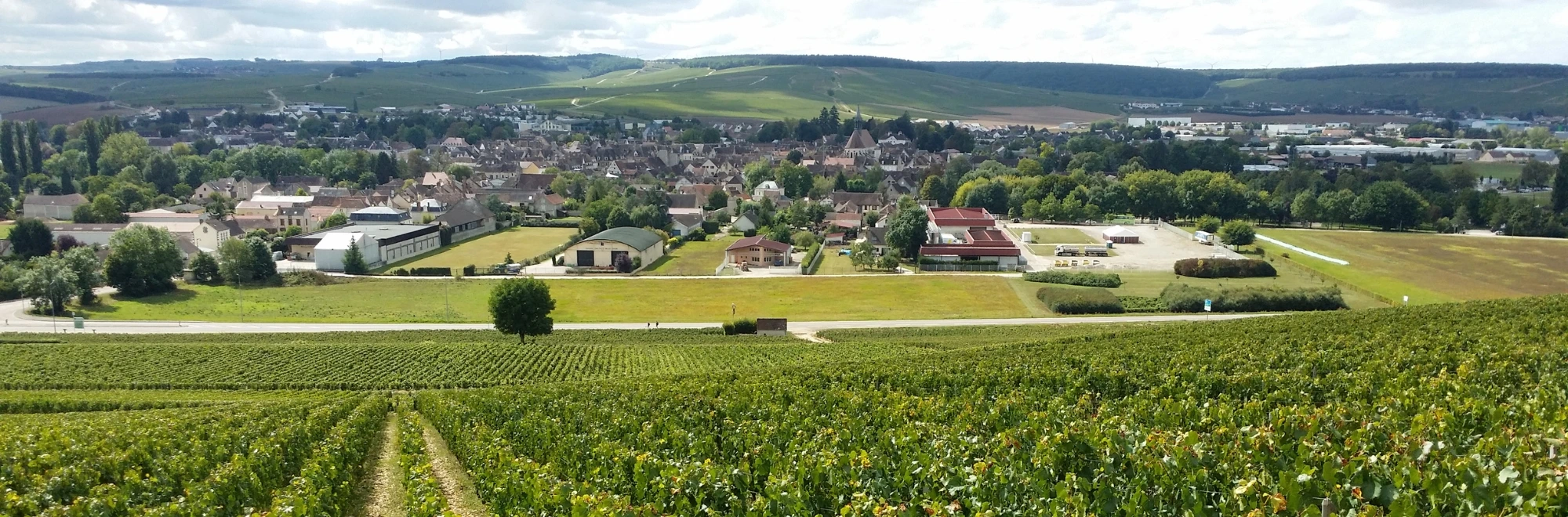
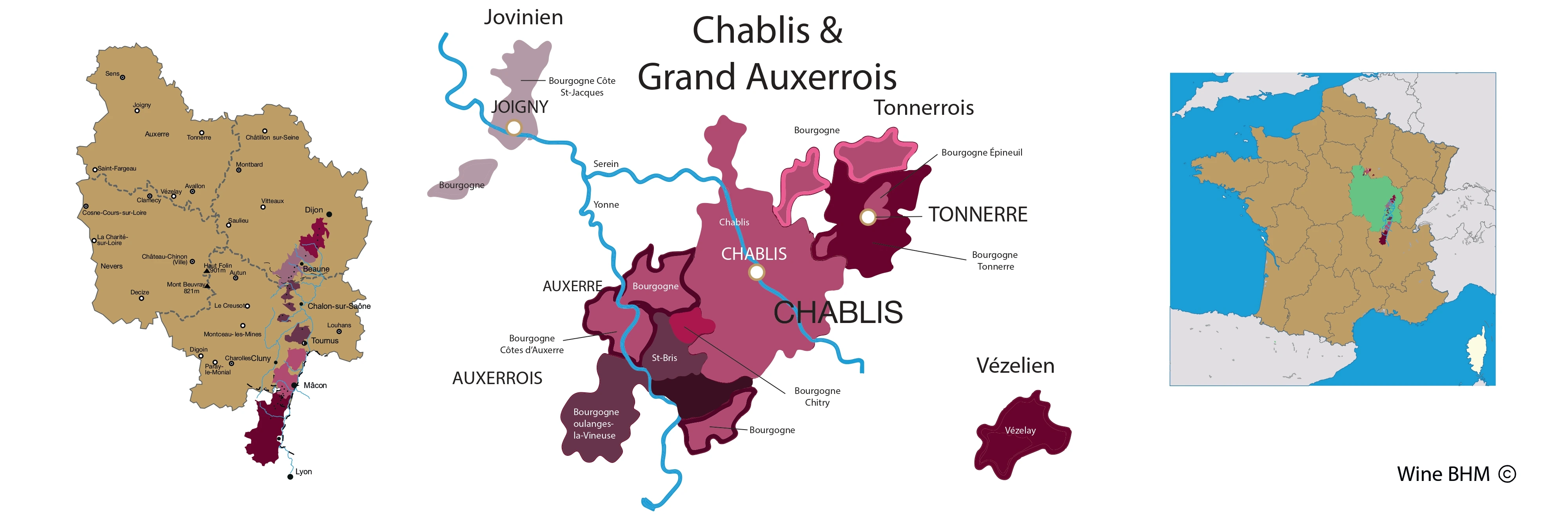
Located halfway between Beaune and Paris, the Chablis production zone covers some twenty communes. Bordering the Serein Valley, it is composed of landscapes of valleys with wooded summits, the vines carpeting the hillsides. The climate is semi-continental: winters are long and harsh and summers warm. Far from maritime influences, the region is subject to spring frosts.
Chardonnay is the sole grape variety of the appellation. An early ripener, it appreciates low-fertility calcareous soils. Chablis, with its grey marls and limestone beds, is therefore its preferred terroir. This subsoil, 150 million years old — Upper Jurassic — is called Kimmeridgian. Its particular feature is the presence, in large quantities, of Exogyra virgula fossils: a small oyster that confers on Chablis wines their minerality and iodine-tinged flavour.
Crystalline, pure and floral, Chablis wines benefit from their diversity of Climats to reveal infinite aromatic variations. The AOC Chablis is more focused on freshness and finesse, Chablis Premier Cru presents a floral and mineral aromatic palette, and Chablis Grand Cru, behind its golden-green robe, achieves a perfect balance between dryness, vivacity and acidity. But all share the mineral fragrances and citrus and white flower notes typical of the Chablisien.
Chablis is one of the most recognisable dry white wines in the world. Its unique minerality and iodine character make it a wine immediately identifiable in blind tastings by sommeliers and discerning enthusiasts. For importers and wine merchants, Chablis benefits from global renown that facilitates sales, particularly in Anglo-Saxon markets where it is often perceived as the reference for dry white wines of Burgundy. Its natural affinities with oysters, shellfish and fish also make it a highly prized wine in gastronomic restaurants worldwide.
Would you like your domaine or your company to appear on this page? Featured listings are reserved for Wine BHM Pro Premium members.
Join the selection of producers on the platform.
Join the network*Featured listings are reserved for Pro Premium members, subject to terms and conditions.