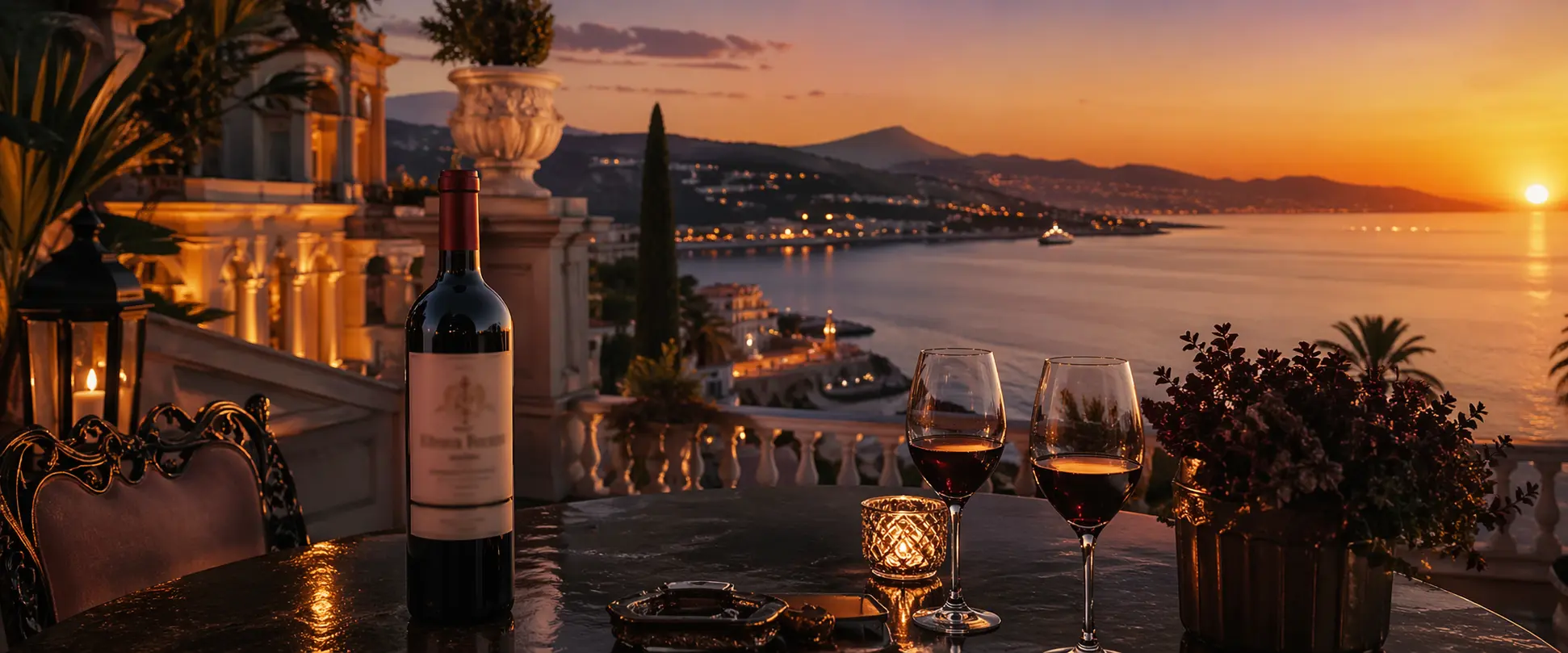
A palace hotel is not simply a luxury establishment. It is a world unto itself — a promise of absolute excellence where every detail, from the bed linen to the glass of wine served at the bar, contributes to an unforgettable experience. In this context, the wine, champagne and spirits policy of a grand hotel is not an accessory: it is a pillar of its identity. Palaces and leading international resorts rank among the most influential institutional buyers in the premium wine market, and their sommeliers are among the most respected prescriptors on the planet.
The relationship between palace hotels and wine is as old as hospitality itself. Since the opening of the Ritz in Paris in 1898 and the Savoy in London in 1889, grand hotels have always regarded their cellar as a fundamental element of their offering. Today, in a luxury hospitality market more competitive than ever, wine policy has become a genuine tool for differentiation, guest loyalty and brand identity.
A leading palace typically holds a cellar of several thousand references, carefully selected by a head sommelier whose role extends far beyond simple stock management. They advise guests, lead private tastings, organise event dinners with producers, develop exclusive food-and-wine pairings with the establishment's starred chefs, and actively contribute to the gastronomic image of the house.
For producers, importers and négociants, palaces and grand resorts represent a premium distribution channel of considerable strategic value: regular volumes, an ultra-qualified clientele, international visibility and a lasting prescriptive effect.
Grand hospitality was truly born in the 19th century, driven by the rise of rail travel and a wealthy bourgeoisie in search of comfort and prestige. César Ritz, known as the "king of hoteliers and hotelier of kings", laid the foundations of a codified luxury hospitality model in which the table — and therefore wine — occupied a central place. His establishments in Paris, London and beyond relied on the finest chefs and the best cellars to build their reputation.
In the 20th century, the internationalisation of hotel groups — Four Seasons, Ritz-Carlton, Marriott, InterContinental — multiplied the points of contact between major wine brands and a global clientele. The 1970s and 1980s saw the emergence of a new generation of hotel sommeliers, trained and recognised, who established hotel sommellerie as a discipline in its own right within luxury hospitality.
Today, the rapid development of ultra-luxury resorts — in Dubai, the Maldives, Singapore, Saint-Barthélemy, Tuscany and Patagonia — is creating new markets for premium wines & spirits in destinations where affluent international guests seek a complete gastronomic experience as demanding as anything found in Paris or New York.
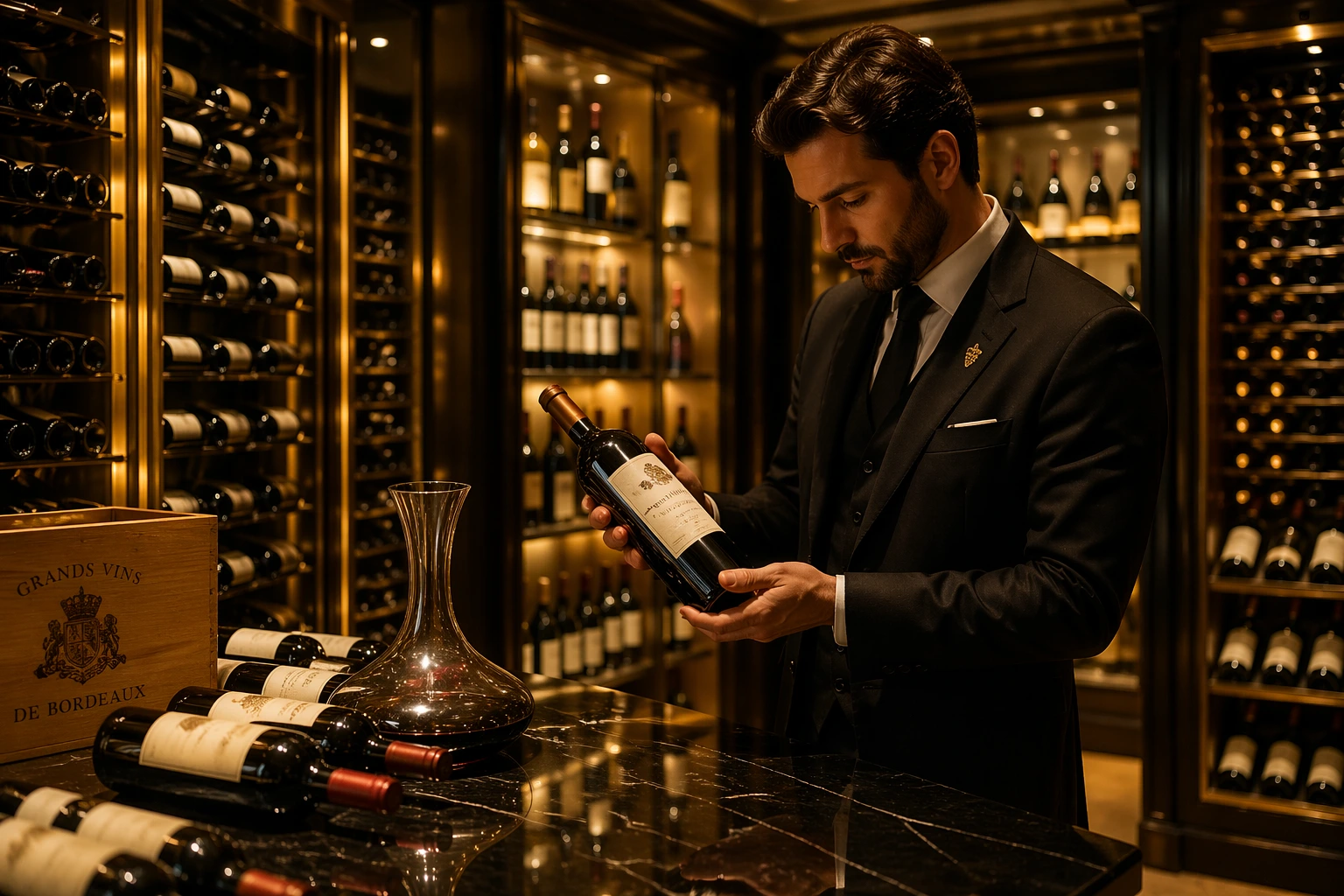
In a palace or grand resort, wine policy is structured at several levels. The head sommelier defines the overall cellar strategy, in line with the gastronomic philosophy of the establishment and the expectations of its clientele. Under their direction, a team of sommeliers provides daily service across the hotel's various restaurants, bars and private spaces.
Procurement takes place through fine wine merchants, direct relationships with estates, en primeur purchases for leading Bordeaux and Burgundy houses, and sometimes via auction for exceptional vintages. The annual cellar budgets of grand palaces can run to several hundred thousand euros, with stock valuations reaching several million for the most iconic establishments.
A palace wine list is a living document, regularly updated to reflect market trends, available vintages and producer partnerships. Some palaces offer private cellar programmes for their most loyal guests, where they store their own bottles and entertain their own guests in an exclusive setting.
Room service, premium cocktail bars, spa beverage offerings and private events all represent additional touchpoints with high-end references, multiplying consumption and prescription opportunities within a single establishment.
The global luxury hotel market was valued at more than $115 billion in 2023 and is projected to exceed $195 billion by 2030, according to industry forecasts.
More than 1,500 establishments classified five stars or equivalent worldwide, with a growing share in the emerging markets of Asia, the Middle East and Africa.
Wine & spirits spending represents on average between 8 and 15% of a palace's food and beverage revenue, with significant peaks during private events and gala dinners.
Demand for organic and biodynamic wines is accelerating in European and Asian palaces, driven by a clientele increasingly sensitive to authenticity and sustainability.
Private cellar programmes are expanding rapidly, particularly in Asia and the Middle East, where affluent clients invest in collections stored at the palaces they visit regularly.
Integrated wine tourism experiences — stays at wine estates converted into boutique hotels, wine retreats, private tasting workshops — represent a structural trend reshaping the boundaries between hospitality and the wine world.
For a wine estate, a Champagne house or a spirits producer, being listed in a leading palace represents far more than a line of sales. It is internationally recognised proof of quality, a permanent showcase before a wealthy and influential clientele, and a prescriptive lever towards other channels — importers, distributors, private clients — who rely on the legitimacy of great establishments to guide their choices.
Palaces are also privileged partners for brand events. Vintage launch dinners, verticals organised in private cellars, gastronomic weekends co-branded with a prestigious estate: these formats generate media and social visibility of the highest value, often impossible to achieve through conventional advertising channels.
For premium spirits — cognac, armagnac, single malt whisky, agricultural rum, artisan gin — the bars of grand palaces are prime showcases. Their bartenders and bar managers are influential prescriptors, capable of introducing a brand to an international clientele that was previously unfamiliar with it.
Wine list listing — Permanent visibility before an affluent international clientele in a premium consumption context.
Event dinners and producer evenings — Exclusive, high-impact formats regularly covered by gastronomy press and social media.
Private cellar and storage programmes — Direct sales opportunity to ultra-premium clients in a secure and prestigious setting.
Chef-producer partnerships — Co-creation of exclusive food-and-wine pairings with the establishment's starred chefs, a powerful cross-visibility lever.
Premium bar and signature cocktails — Showcasing exceptional spirits through original creations, reaching a clientele open to discovery.
Wine tourism stays and experiences — Development of packages combining accommodation and discovery of an estate or wine region.
Access to emerging markets — Palaces in Dubai, Shanghai, Singapore or Riyadh are gateways into high-growth potential markets.
Prescription to private clients — Palace sommeliers recommend estates and references to their guests, who then seek them out for their personal cellars.
Le Ritz Paris, Paris, France — Legendary cellar, Hemingway Bar, a global benchmark of luxury hospitality.
The Savoy, London, United Kingdom — British institution, exceptional cellar, the legendary American Bar.
Hotel de Paris, Monaco — Cave du Siècle, one of the largest and most valuable hotel cellars in the world.
Burj Al Arab, Dubai, UAE — Symbol of absolute luxury, with one of the most exclusive spirits and champagne selections in the world.
Four Seasons George V, Paris, France — Three starred restaurants, a benchmark cellar and exceptional food-and-wine pairings.
The Peninsula, Hong Kong — Asian luxury institution, with a strong premium wine policy tailored to local and international guests.
Claridge's, London, United Kingdom — Iconic palace, remarkable cellar, ultra-high-end international clientele.
Aman Tokyo, Tokyo, Japan — Zen philosophy and exceptional wines, among the most discreet and sought-after addresses in Asia.
Belmond Hotel Cipriani, Venice, Italy — Unique setting, premium Italian wine selection, a cornerstone of European luxury hospitality.
One&Only Cape Town, Cape Town, South Africa — A showcase for South Africa's finest wines in an exceptional resort setting.
Singita Lodges, East and Southern Africa — A global reference in luxury lodge hospitality, with a remarkable South African and international wine policy.
Rosewood São Paulo, São Paulo, Brazil — A new jewel of South American luxury, embracing the diversity of New World wines.
Would you like your establishment, your house or your domaine to appear on this page? Featured listings are reserved for Wine BHM Pro Premium members.
Join the selection of producers on the platform.
Join the network*Featured listings are reserved for Pro Premium members, subject to terms and conditions.