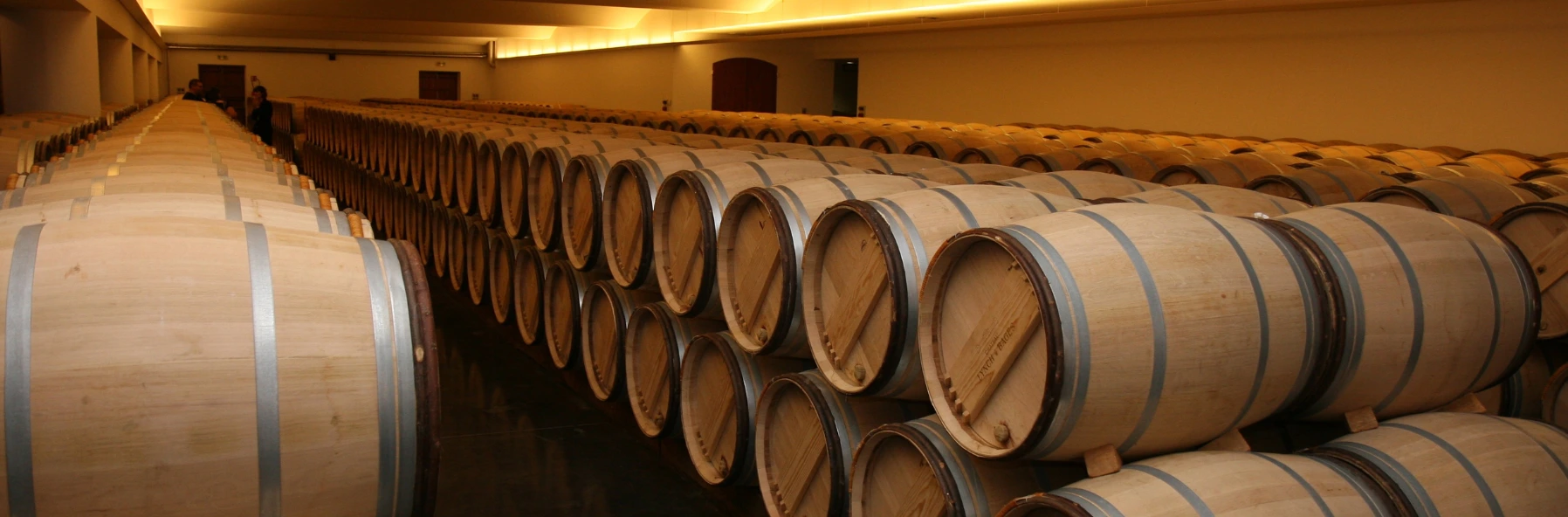
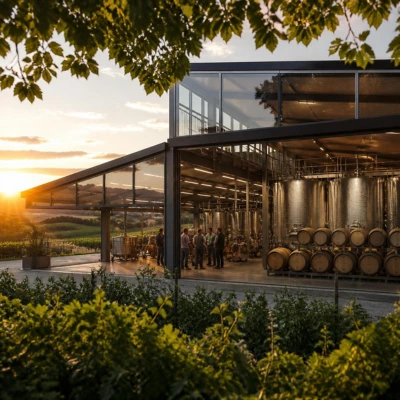
A wine cooperative is a collective structure bringing together several winegrowers who pool their grapes to vinify, store and market their wines together. Each member retains ownership of their vines and delivers their harvest to the cooperative, which handles all transformation and sales. In return, they receive remuneration calculated according to the quality and volume of their contribution.
This model allows small and medium-sized winegrowers to access modern and costly winemaking equipment, a structured sales force and export presence, resources that would be inaccessible to most of them individually.
The wine cooperative movement was born in France at the end of the 19th century, in the wake of the phylloxera crisis that had ruined thousands of winegrowers. The first French wine cooperative was created in 1901 in Maraussan, in the Hérault department, driven by the Languedoc socialist movement. It paved the way for a genuine social revolution in the wine world.
The movement accelerated during the 1930s economic crisis, then experienced considerable growth after the Second World War. Cooperatives became the backbone of French wine production, particularly in Languedoc, the Rhône Valley, Alsace and Bordeaux. Today they account for nearly 50% of French wine production.
Internationally, the cooperative model has developed in many producing countries: Spain, Italy, Germany, Portugal, South Africa, Argentina, Australia. Each country has adapted this model to its own legal, cultural and economic specificities.
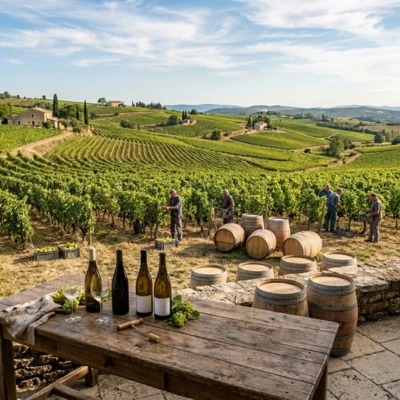
The wine cooperative operates on the principle of "one man, one vote": each member has one vote at general meetings, regardless of the volume of their contribution. Strategic decisions (investments, commercial policies, pricing) are taken collectively by the members assembled in general meeting.
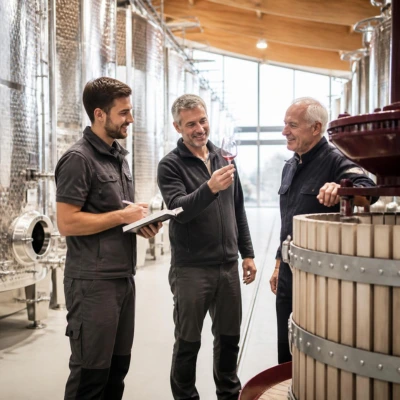
A board of directors elected by the members oversees daily management, entrusted to a technical director and a salaried commercial team. The cooperative has its own winemaking equipment: presses, tanks, analysis laboratory, shared among all members.
Member remuneration is calculated according to precise criteria: grape variety, ripeness, potential alcohol level, sanitary condition and sometimes the plot of origin. The best cooperatives have developed quality bonus systems to encourage their members to produce exceptional grapes.
According to official data from Coop de France Viticulture and the OIV:
Nearly 50% of French wine production handled by cooperatives, Coop de France, 2023
Over 800 active wine cooperatives in France, FranceAgriMer
100,000 winegrower members of French wine cooperatives, Coop de France
3 billion euros in annual turnover of French wine cooperatives, Coop de France, 2022
Over 5,000 wine cooperatives recorded in the European Union, Copa-Cogeca
 The different forms of wine cooperatives worldwide
Vinification cooperative: receives members' grapes, handles vinification, storage and commercialisation
Union of cooperatives: grouping of several cooperatives to pool large-scale commercialisation
Cooperative with own brand: develops its own commercial brands in addition to bulk sales
Certified organic cooperative: produces exclusively or predominantly organic wines
Winzergenossenschaft: German wine cooperative, Moselle, Rhineland, Baden
Cantina sociale: Italian wine cooperative, Veneto, Sicily, Trentino-Alto Adige
Bodega cooperativa: Spanish wine cooperative, Castile, La Mancha, Rioja
Adega cooperativa: Portuguese wine cooperative, Douro, Alentejo
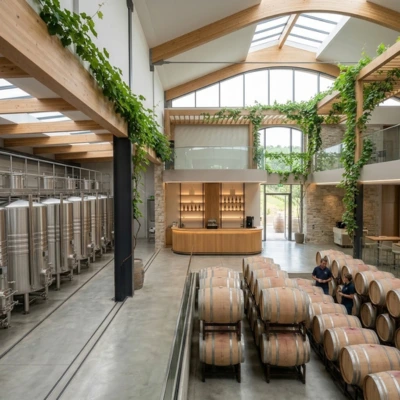
Wine cooperatives face a major challenge: moving upmarket. Long associated with table wine or bulk production, the best cooperatives have undergone a profound transformation to offer high-end cuvées capable of rivalling top private estates. Cave de Tain in the Rhône Valley and Wolfberger in Alsace are emblematic examples.
Consolidation is also a key issue. Faced with international competition and rising costs, many small cooperatives are merging to reach a critical size allowing investment in modern equipment and high-performing commercial teams.
Finally, the transition to organic and low-input farming is accelerating. Many cooperatives now offer organic farming channels to their members, responding to growing demand from consumers and international distributors.
Cave de Tain, Tain-l'Hermitage, Rhône Valley, France
Wolfberger, Eguisheim, Alsace, France
Les Vignerons de Buzet, Buzet-sur-Baïse, South-West, France
Les Vignerons Catalans, Roussillon, France
Mezzacorona, Trentino-Alto Adige, Italy
Cantina di Soave, Veneto, Italy
Moselland, Bernkastel-Kues, Moselle, Germany
Félix Solís, Valdepeñas, Castile, Spain
Adega de Borba, Alentejo, Portugal
Robertson Winery, Robertson, South Africa
E&J Gallo Winery, Modesto, California, USA
Hardys Wines, McLaren Vale, Australia
Kavaklidere, Ankara, Turkey
Bestheim, Bennwihr, Alsace, France
Cave Ardèche, Ruoms, Ardèche, France
Vignerons de Caractère, Rhône Valley, France
Cave de Saint-Désirat, Saint-Désirat, Ardèche, France
Cantine Riunite, Emilia-Romagna, Italy
Zentralkellerei Badischer Winzergenossenschaften, Baden, Germany
Coviñas, Utiel-Requena, Spain
Familia Zuccardi, Mendoza, Argentina
Swartland Winery, Swartland, South Africa
Lindemans, Hunter Valley, Australia
Uvica, Rouffach, Alsace, France
Cave du Mont du Buis, Beaumes-de-Venise, France
Mont Saint-Victor, Aix-en-Provence, France
Would you like your company to appear on this page? Listings are reserved for Pro Premium members of Wine BHM.
Join the selection of producers on the platform.
Join the network*Featured listings are reserved for Pro Premium members, subject to terms and conditions.