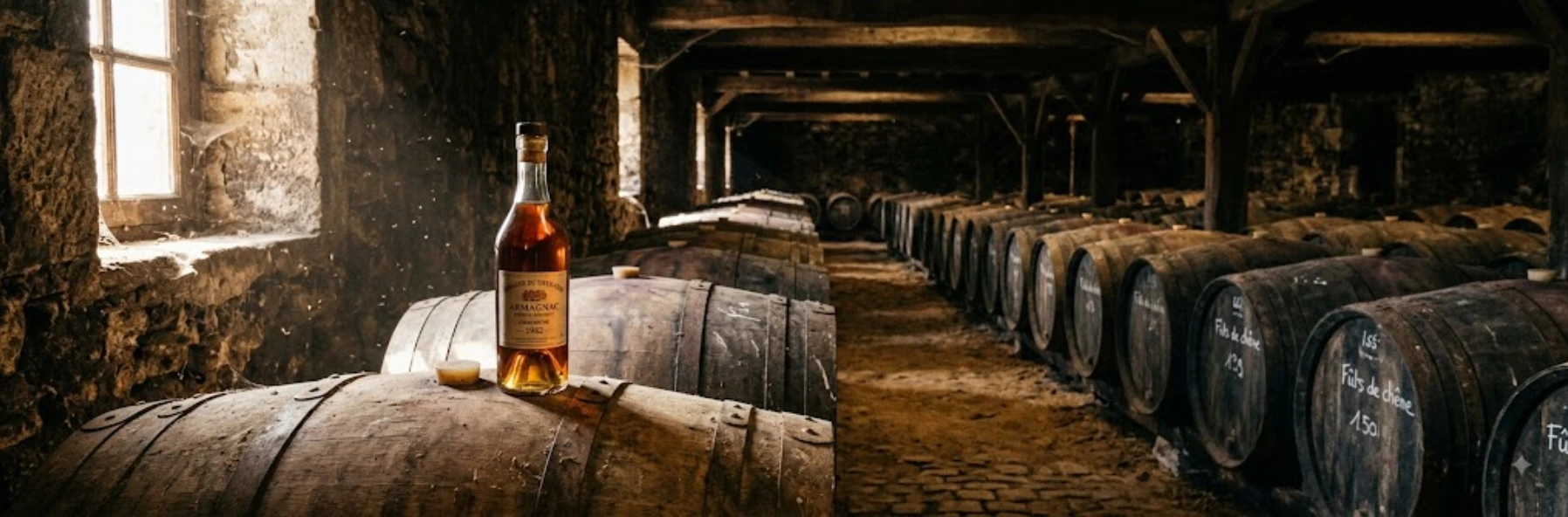
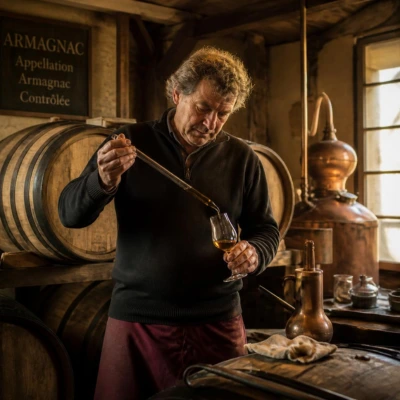
Armagnac producer is a craftsman distiller specialising in the elaboration of Armagnac, the oldest brandy in France, benefiting from a strictly delimited Appellation d'Origine Contrôlée (AOC) in the Gers department of South-West France. Like Cognac, this appellation is exclusively French.
But Armagnac differs profoundly from Cognac: it is distilled in a single pass through a continuous Armagnac still, which gives it richer, more rustic and more complex aromas. It is a terroir spirit par excellence, often vinified and distilled by small independent producers working in the traditional way on family estates passed down through generations.
Armagnac is the oldest French brandy. The first written mention dates back to 1310 — more than three centuries before Cognac. Produced in medieval Gascony, it was originally used for medicinal purposes and traded by pilgrims on the road to Santiago de Compostela.
For centuries, Armagnac remained a local and confidential spirit, produced by hundreds of small mobile stills that travelled between Gascon farms each autumn. It was in the 19th century that the region began to organise commercially, particularly thanks to the development of the railway network which enabled export to Paris and abroad.
The Armagnac AOC was officially recognised in 1936, among the first spirit AOCs in France. Today, Armagnac is experiencing a spectacular revival driven by a new generation of passionate producers and by the global craze for artisanal spirits and vintage releases.
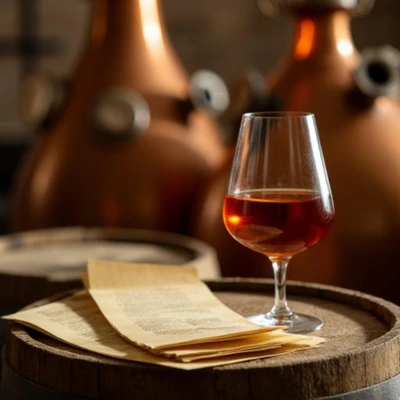
Armagnac production begins with vine cultivation, primarily using the Baco 22A, Ugni Blanc, Folle Blanche and Colombard grape varieties. These varieties produce very acidic, low-alcohol wines — ideal for distillation.
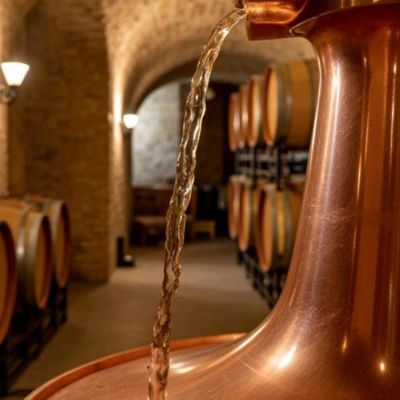
Distillation in the continuous Armagnac still is carried out in a single pass, unlike Cognac which requires double distillation. This method preserves more of the primary aromas of the grapes and gives Armagnac its rustic and deep personality. Distillation takes place in autumn and winter, often using mobile stills that travel from property to property.
Ageing in black oak casks from the Gers (Gascon oak) is a specificity of Armagnac. It can last from a few years to several decades. Vintage Armagnac, from a single harvest of a given year, is one of the great specialities of the region and a rarity highly sought after by collectors.
According to the Bureau National Interprofessionnel de l'Armagnac (BNIA):
Approximately 3,500 hectares of vines in production across the three AOC zones — BNIA
Over 800 Armagnac producers recorded in the region — BNIA
Approximately 5 million bottles sold per year worldwide — BNIA
Over 60% of production destined for export — BNIA, 2022
Vintages available from 1900 to the present day, a worldwide uniqueness among spirits
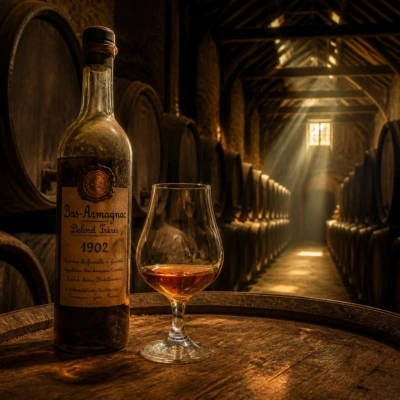
Bas-Armagnac — the most renowned zone, sandy soils, the finest and most aromatic spirits, nicknamed "Grand Armagnac"
Armagnac-Ténarèze — clay-limestone soils, more structured spirits, longer ageing required
Haut-Armagnac — very marginal production, limestone soils, zone being rediscovered
Blanche Armagnac — unaged spirit, emerging trend, production growing strongly since 2010
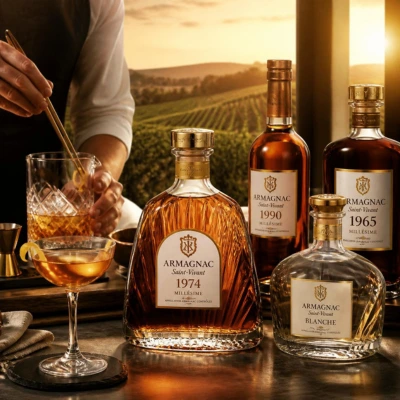
Armagnac is experiencing a spectacular revival. Long overshadowed by Cognac, it now benefits from a global craze for artisanal, authentic and traceable spirits. Bartenders and mixologists around the world are rediscovering its complex aromas and exceptional vintages.
The valorisation of vintages is one of Armagnac's greatest assets. Unlike most spirits which are blends without a year, Armagnac can be produced as a pure vintage, preserving the unique character of a given harvest. Offering a bottle of Armagnac from the birth year of a loved one is a very much alive Gascon tradition.
Finally, Blanche d'Armagnac, an unaged spirit bottled immediately after distillation, is enjoying growing success among bartenders and premium cocktail enthusiasts, opening new markets for producers.
Dartigalongue — Nogaro, Bas-Armagnac, France
Maison Janneau — Condom, Ténarèze, France
Delord — Lannepax, Bas-Armagnac, France
Domaine Boingnères — Calonges, Bas-Armagnac, France
Castarède — Mézin, Bas-Armagnac, France
Laberdolive — Villeneuve-de-Mézin, Bas-Armagnac, France
Larressingle — Condom, Ténarèze, France
Sempé — Aignan, Bas-Armagnac, France
Tariquet — Eauze, Bas-Armagnac, France
Château de Laubade — Sorbets, Bas-Armagnac, France
Ryst-Dupeyron — Condom, Ténarèze, France
Samalens — Laujuzan, Bas-Armagnac, France
Lafontan — Manciet, Bas-Armagnac, France
Arton — Cazaubon, Bas-Armagnac, France
Domaine des Jonquilles — Lannepax, Bas-Armagnac, France
De Montal — Saint-Puy, Ténarèze, France
Domaine de Pellehaut — Montréal-du-Gers, Ténarèze, France
Château Garreau — Lartigue, Bas-Armagnac, France
Nismes-Delclou — Nogaro, Bas-Armagnac, France
Domaine du Casque — Manciet, Bas-Armagnac, France
Lesgourgues — Cazaubon, Bas-Armagnac, France
Saint-Vivant — Pauillac-de-Lomagne, Ténarèze, France
Jaulin — Éauze, Bas-Armagnac, France
Château de Busca-Maniban — Mansencome, Ténarèze, France
Guasch — Nogaro, Bas-Armagnac, France
Domaine de la Chervette — Eauze, Bas-Armagnac, France
Would you like your company to appear on this page? Listings are reserved for Pro Premium members of Wine BHM.
Join the selection of producers on the platform.
Join the network*Featured listings are reserved for Pro Premium members, subject to terms and conditions.