CHAMPAGNE, LAND OF PRESTIGIOUS SPARKLING WINE
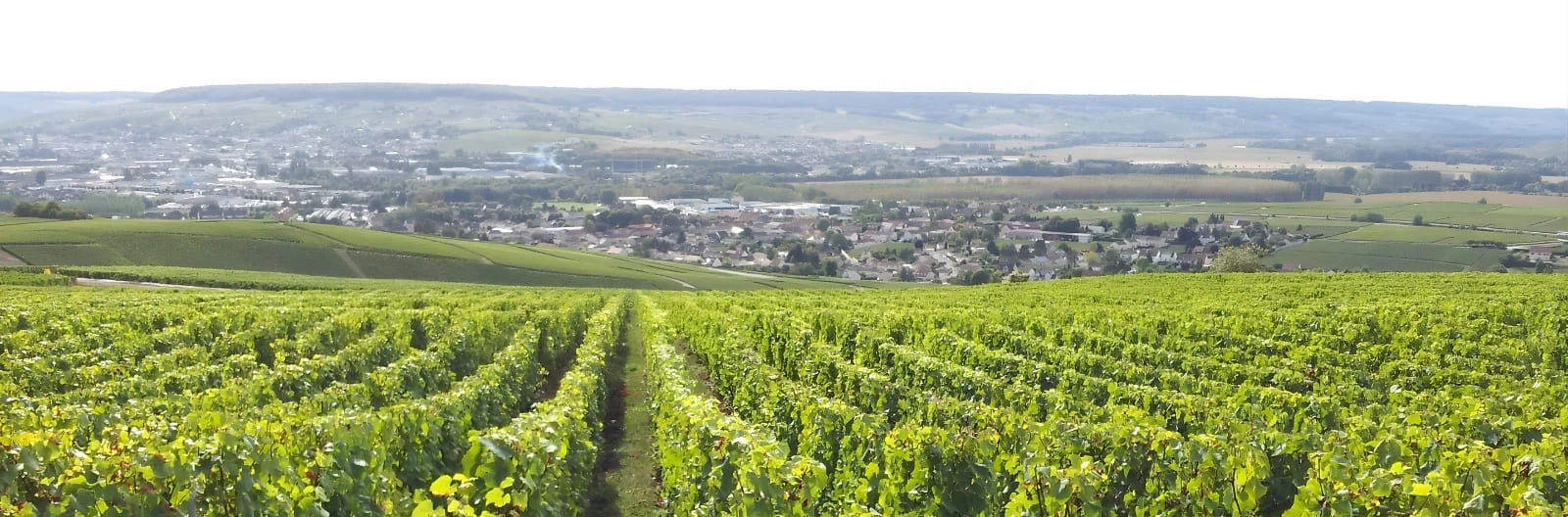
Champagne, an iconic wine region located east of Paris, is world-renowned for its exceptional sparkling wines. Covering an area of over 34,300 hectares, it benefits from a cool climate and unique limestone soils that favor the production of fine, elegant wines. Champagne is governed by strict production rules and a traditional method that give it its inimitable character. The main grape varieties used are Chardonnay, Pinot Noir, and Meunier, each bringing distinct characteristics to the blend.
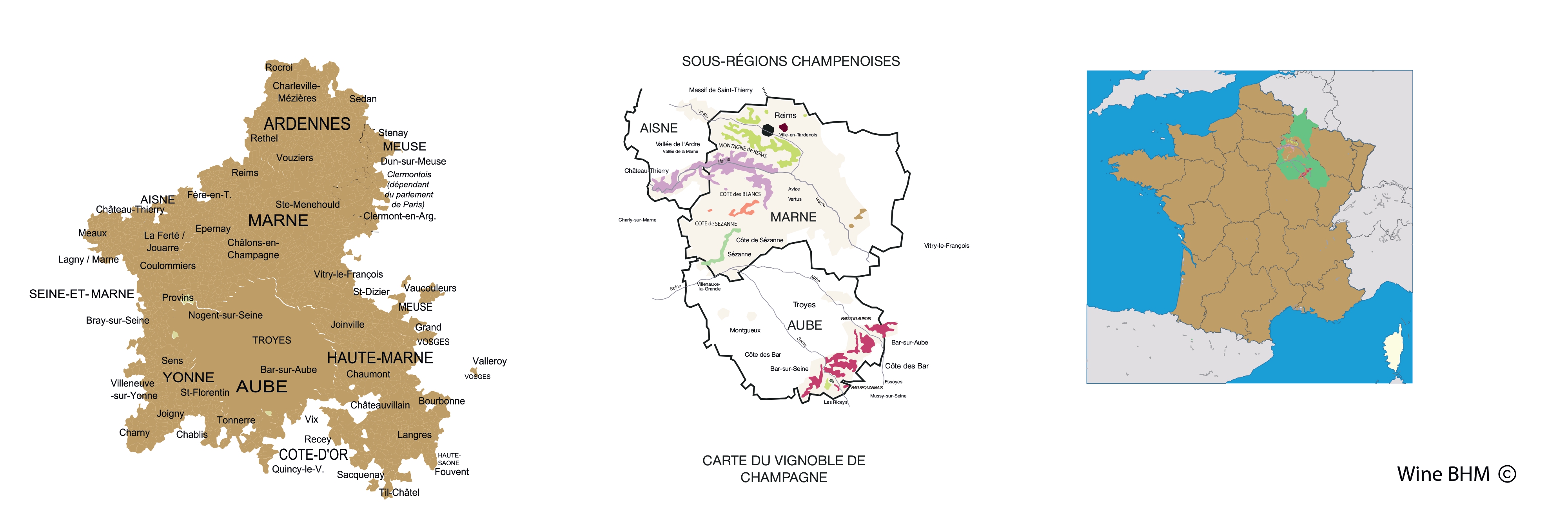
The Champagne appellation d'origine contrôlée (AOC) guarantees the authenticity and quality of the wines produced. The Champagne vineyards are divided into four regions, each with its own characteristics. This division, based on different geological qualities, highlights the diversity of the Champagne terroir.
- The Côte des Blancs: a privileged area for “blanc de blancs” wines, it stretches for around fifteen kilometers south of Epernay. Here, the Chardonnay grape variety predominates. It accounts for 95% of the vines grown and explains the name of the region. Very delicate, Chardonnay is considered to be early ripening and sensitive to spring frosts. It thrives here on the east-facing slopes, benefiting from limestone soil and shelter from the wind.
- The Montagne de Reims: unlike the previous production area, this is the preferred terroir for Pinot Noir, which accounts for no less than 60% of cultivation. Vigorous and generous, it is more adaptable than Chardonnay, which is grown on the hillsides further east.
- The Marne Valley: chalk, the true symbol of the Champagne terroir, is very present in the eastern part of the area. The further west you go, the deeper the limestone sinks, giving way to predominantly clay-marl soils. A similar variation can be seen in the grape varieties. While Pinot Noir is very important, Pinot Meunier becomes the majority variety as you move towards the western part of the region.
- The Côte des Bar: located in the south of the department, it consists of numerous small wine-growing villages. Here, the terroirs are predominantly clay-limestone. They allow for superb development of Pinot Noir, the king of grape varieties in the production area.
The hierarchy of Champagne vintages
As in the Burgundy wine region, Champagne wines are classified according to their terroir. There are three categories: unclassified, “Premier Cru” and “Grand Cru.” This classification determines the price of the grapes. The system is based on a reference price, with a certain percentage paid according to the status of the wine. Thus, a Grand Cru corresponds to 100% of this price, while a Premier Cru will be between 90 and 99% of the price, and an unclassified wine between 80 and 89%. Today, this system no longer has official legal value at the European Union level, but it remains widely used as a benchmark for quality and marketing.
There are a total of around 319 villages in Champagne, including 44 Premier Crus and 17 Grands Crus. This distinction is made on the basis of multiple criteria such as subsoil, slope, and exposure. The Grands Crus represent 3,000 hectares. Like the Premiers Crus (approximately 7,500 hectares), the estate's land must be part of one or more villages classified as Grand Cru/Premier Cru. The unclassified vineyards cover approximately 23,500 hectares of the Champagne vineyards and have less stringent specifications.
From the Romans to royal tables
The history of the Champagne vineyards began during the Roman era. It was then taken over by bishops—including the eminent Archbishop of Reims—who developed the cultivation methods and winemaking techniques still used today. In the Middle Ages, effervescence was already present, albeit unpredictable. It resulted from incomplete fermentation and was therefore light and short-lived. Champagne nevertheless enjoyed a certain degree of success, thanks in particular to its distinctive character, which came from the chalky nature of its subsoil. In addition to effervescence and terroir, the Champagne region had the advantage of precision blending. This is a unique skill, honed over many years by monks. Representing French culture and spirit, champagne quickly won over royalty and wealthy individuals. Already legendary at the beginning of the 20th century, it was finally protected by AOC status.
A mosaic of micro-terroirs
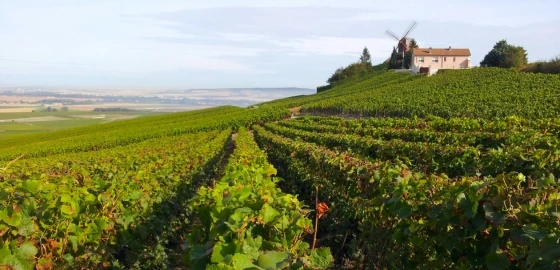
Champagne covers 34,000 hectares spread across four main regions: the Montagne de Reims, the Vallée de la Marne, the Côte des Blancs, and the Côte des Bar. This steep, hilly vineyard was formed 20 million years ago. It was created when the northern and eastern parts of the Paris Basin rose up following subsidence in the center under the weight of sediments. The region is also characterized by a dual climatic influence. The first is oceanic, providing ideal rainfall and mild temperature contrasts; the other is continental, responsible for good sunshine even with occasional destructive frosts.
Chalk: the DNA of Champagne
Although generally chalky, the subsoil varies slightly depending on the area. There is outcropping chalk (buried deep underground) with a marly, clayey, or sandy tendency. This subsoil promotes soil drainage and gives the wine a minerality that is so characteristic of the mineral aroma and tension on the palate of the wines. As a result, the Pinot Noir (38% of the vineyards), Pinot Meunier (32%) and Chardonnay (30%) vines benefit from sufficient water supply, even during the driest periods. This great diversity, both in terms of soil and climate, ensures a plurality of terroirs. Champagne has a multitude of plots, each with its own characteristics.
A unique method: the art of blending
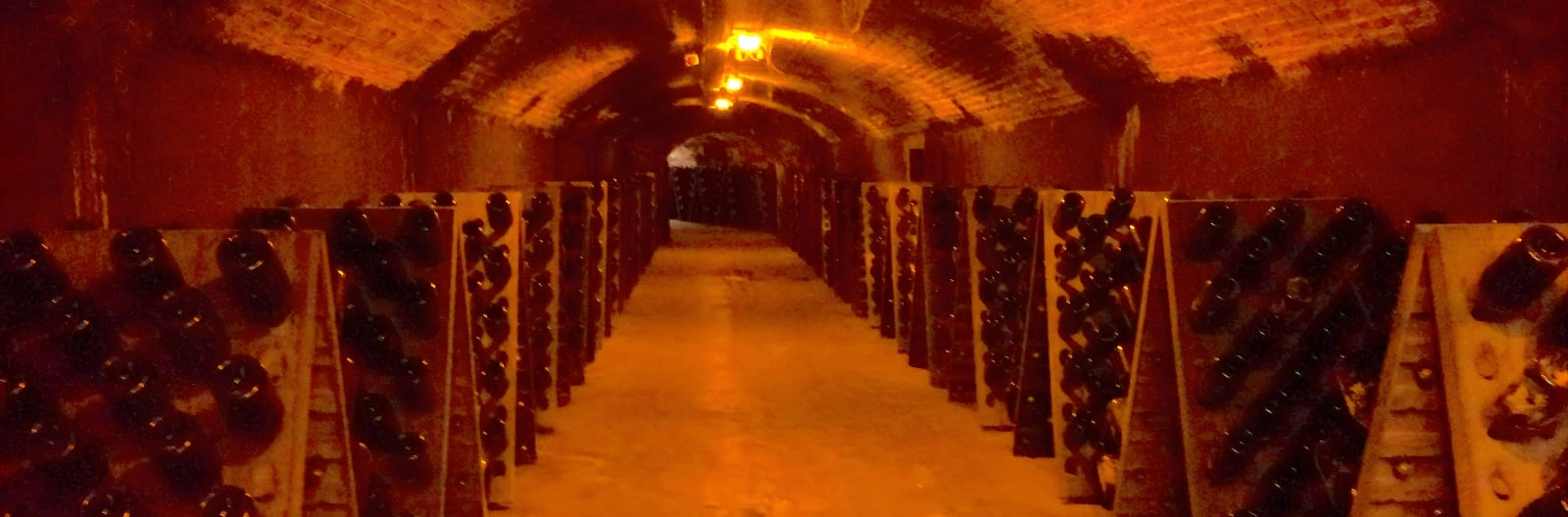
After pressing and initial fermentation, the champagne is blended. The cellar masters of the houses and estates, in the presence of the owners and vineyard managers, work together to blend wines with different characteristics and complementary personalities, as well as vintages with varying qualities. The aim here is to obtain balanced wines of consistent quality: for example, Brut Sans Année (BSA) is used for blending different vintages. The next stage, bottling (or tirage), does not take place until January 1 following the harvest. A tirage liqueur is added to initiate fermentation, before the bottles are hermetically sealed. They are then placed on racks in the depths of the cellars to undergo maturation on lees and the second fermentation. Fifteen months must elapse between tirage and shipment, including 12 months on lees.
Finally, the riddling process takes place, which involves moving the sediment into the neck of the bottle, followed by disgorging, which removes this sediment. To finish, the champagne may or may not be dosed (with a small amount of liqueur d'addition added), and then finally corked.
A wide variety of wines
The qualities of a champagne depend on many factors. The grape varieties play a key role. There are “blanc de blancs” champagnes – made exclusively from Chardonnay – and “blanc de noirs” champagnes made from Pinot Noir and Pinot Meunier.
While many champagnes are made from a blend of wines from several years (BSA), some exceptional harvests lead to the production of vintage champagnes consisting of a blend from a single year. The choice of champagne can also be defined by its color or dosage, which makes it a sweet, brut, or demi-sec wine, dry or undosed: the latter is experiencing a (still modest) trend among connoisseurs looking forchampagnes that are more sharp, lively, and austere, but with great freshness. It should be noted that low dosage champagnes are currently the general trend and are a response to an increasingly strong consumer demand for this type of champagne.
In Champagne, the appellation d'origine contrôlée (AOC) guarantees the quality and authenticity of wines produced in this exceptional wine-growing region. The classification is based on a strict system that distinguishes wines according to their terroir and prestige.
The Champagne appellation: a unique and protected label
The Champagne appellation is strictly reserved for sparkling wines produced in the Champagne region using traditional methods. It covers four sub-regions:
The Montagne de Reims
The Marne Valley
The Côte des Blancs
The Côte des Bar
This label protects the expertise and identity of champagne, guaranteeing exceptional quality thanks to strict production rules.
The Classification of Crus: a historical hierarchy
Champagne is distinguished by a classification of crus according to their quality potential, with three main levels:
Grands Crus: This prestigious classification includes 17 villages such as Avize, Aÿ, Bouzy, and Verzenay. Grapes from these terroirs are considered the most noble.
Premiers Crus: This category includes 44 villages renowned for their quality, such as Cumières, Mareuil-sur-Aÿ, and Vertus.
Les Autres Crus: These represent the majority of wine-growing communes and produce balanced, accessible champagnes.
Les Coteaux-Champenois and Rosé des Riceys: complementary AOCs
Although Champagne is world-famous for its sparkling wines, it also produces still wines under two specific appellations:
The Coteaux-Champenois AOC (since 1974) allows the production of red, white, and rosé wines from the same grape varieties as champagne.
The Rosé des Riceys AOC is a rarity produced exclusively in the commune of Les Riceys from Pinot Noir grapes, offering a rosé with character.
A classification system promoting Champagne excellence
Thanks to this hierarchical system, Champagne preserves its prestige and guarantees exceptional wines, suitable for all enthusiasts, from connoisseurs to collectors. This rigorous classification system contributes to the worldwide reputation of Champagne, a symbol of celebration and refinement.
Chardonnay
Chardonnay brings finesse, freshness, and floral notes to champagnes. It is mainly grown in the Côte des Blancs.
Pinot Noir
Adding structure and power, Pinot Noir is found in the Montagne de Reims and Côte des Bar regions.
Meunier
This grape variety offers suppleness and fruitiness, and is mainly grown in the Vallée de la Marne.
Unlike other French wine regions, Champagne is dominated by large production houses, but also by independent winegrowers and cooperatives. Among the historic houses are:
Moët & Chandon (Epernay)
Veuve Clicquot (Reims)
Dom Pérignon (Hautvillers)
Krug (Reims)
Taittinger (Reims)
Ruinart (Reims)
Bollinger (Aÿ)
Pommery (Reims)
Salon (Le Mesnil-sur-Oger)
Many independent winegrowers contribute to the richness of Champagne's offerings by producing exceptional vintages from unique terroirs.
CHAMPAGNE WINES
Champagne wines are renowned worldwide for their quality, effervescence, and traditional production method.
Origin and Terroir: Champagne is produced exclusively in the Champagne wine region, located in northeastern France. The chalky soils (chalk, marl, shell limestone) play a key role, allowing for good water regulation and giving the wines a unique minerality. The region's cool climate promotes high acidity in the grapes, which is essential for producing quality sparkling wines.
The Méthode Champenoise, this traditional method is based on several key steps:
Vinification: A double fermentation is carried out, the second taking place in the bottle. It is this fermentation that produces the effervescence, thanks to the addition of yeast and sugar.
Riddling: The bottles are slowly tilted to concentrate the sediment in the neck.
Disgorging: The deposits are removed before the addition of the liqueur d'expédition, which adjusts the level of sweetness according to the desired style of Champagne.
These techniques, combined with the exceptional terroir, make Champagne wines exceptional products that are appreciated all over the world.
Champagne (AOC)
Champagne Grand Cru
Champagne Premier Cru
Blanc de Blancs
Blanc de Noirs
Rosé de Champagne
Coteaux-Champenois
Champagne Millésimé
Champagne Non Millésimé
Champagne Nature ou Brut Nature
The Champagne region has 17 villages classified as Grands Crus, renowned for the exceptional quality of their terroirs and grapes:
Ambonnay
Avize
Aÿ
Beaumont-sur-Vesle
Bouzy
Chouilly
Cramant
Louvois
Mailly-Champagne
Le Mesnil-sur-Oger
Oger
Oiry
Puisieulx
Sillery
Tours-sur-Marne
Verzenay
Verzy
These villages produce very high-quality grapes, often used in the most prestigious cuvées of the great Champagne houses.
Would you like to register your estate or promote it? Contact us
WINE ROUTE
A UNESCO World Heritage Site. The hillsides, houses, and cellars of Champagne are part of the world heritage, offering spectacular views and historic sites. The Champagne tourist route offers several circuits through the vineyards:
-The Montagne de Reims: renowned for its grands crus and historic villages.
-The Côte des Blancs: famous for its exceptional Chardonnays.
-The Marne Valley: known for its Pinot Meuniers and charming villages.
-The Côte des Bar: a region further south, with a more tranquil atmosphere and magnificent landscapes.
Producers often open their cellars to visitors, offering tastings and the opportunity to purchase bottles directly from the growers.
Activities and discoveries:
-Guided tours of historic cellars (such as those of Moët & Chandon, Veuve Clicquot, or Taittinger in Reims and Épernay).
-Hiking or biking through the vineyards.
-Wine tourism experiences such as tasting workshops.
HISTORY AND TECHNIQUE OF CHAMPAGNE
-Musée de la Vigne et du Vin de Champagne (Épernay): Discover the history of winegrowers.
-Pressoria (Aÿ-Champagne): An interactive sensory experience around the production of champagne.
LOCAL EVENTS
-La Fête de la Champagne: In June in Épernay, with tastings and festive entertainment.
-Vendanges: In autumn, watch the grape harvest and take part in wine-making workshops.
VISIT THE MAIN CITIES OF CHAMPAGNE
Reims:
-Maison Ruinart: Visit the Gallo-Roman chalk cellars and discover their vintages.
-Maison Taittinger: Explore 18 km of underground galleries and taste their champagne.
-Maison Vranken-Pommery: Admire the huge chalk cellars and the works of art on display during the tours.
-Maison GH Mumm: Perfect for deepening your knowledge of tasting.
Épernay (the capital of champagne):
-Moët & Chandon: Discover the history of Dom Pérignon and visit their spectacular cellars.
-Mercier: A mini train tour of the cellars is ideal for families.
-De Castellane: Recognizable by its iconic tower, their champagne museum is fascinating.
Troyes:
-Historic center: Stroll through the medieval streets and half-timbered houses.
-Gothic churches: Visit Saint-Pierre Cathedral and Sainte-Madeleine Church.
-Museum of Modern Art: Exhibition of works by Matisse and Braque.
-Factory outlets: Shopping in centers such as McArthurGlen.
-Specialties: Try andouillette sausage and Prunelle de Troyes liqueur.
Charleville-Mézières:
-Place Ducale: Beautiful Renaissance square in the heart of the city.
-Rimbaud Museum: Discover the history of the poet Arthur Rimbaud.
-Saint-Rémi Church: Magnificent Gothic church.
-Nature: Walk in Mont Olympe Park and along the Voie Verte.
-Specialties: Taste local products such as cheese and craft beers.
HISTORIC VILLAGES
-Hautvillers: The village where Dom Pérignon perfected champagne. His tomb is located in the abbey church.
-Aÿ-Champagne: Listed as a UNESCO World Heritage Site, this village offers incredible views and tastings at small estates.
-Les Riceys: The only village with three AOCs: Champagne, Coteaux Champenois, and Rosé des Riceys.
NATURE AND HERITAGE
-Montagne de Reims Regional Nature Park: Perfect for hiking through vineyards and forests.
-Lac du Der: Ideal for watching gray cranes in the fall or relaxing in the summer.
-Parc de Champagne in Reims: A peaceful place for a picnic or a walk.
HOTELS AND HOUSES IN THE HEART OF THE VINEYARDS
-Royal Champagne Hotel & Spa (Champillon): Luxury, fine dining, and wellness with a view of the vineyards.
-Les Avisés (Avize): Charming guest house with a gourmet restaurant.
-Le Château de Sacy: Elegance and refinement in an exceptional setting.
GASTRONOMY AND TASTING:
L'Assiette Champenoise – Tinqueux
Le Parc Les Crayères – Reims
Racine – Reims
Le Grand Cerf – Montchenot
Le Royal – Champillon
Restaurant Jérôme Feck – Châlons-en-Champagne
Le Garde Champêtre – Gyé-sur-Seine
Le Bistrot DuPont – Troyes
La Table du Domaine Les Crayères – Reims
Join the selection of producers on the platform.
Join the network*Featured listings are reserved for Pro Premium members, subject to terms and conditions.