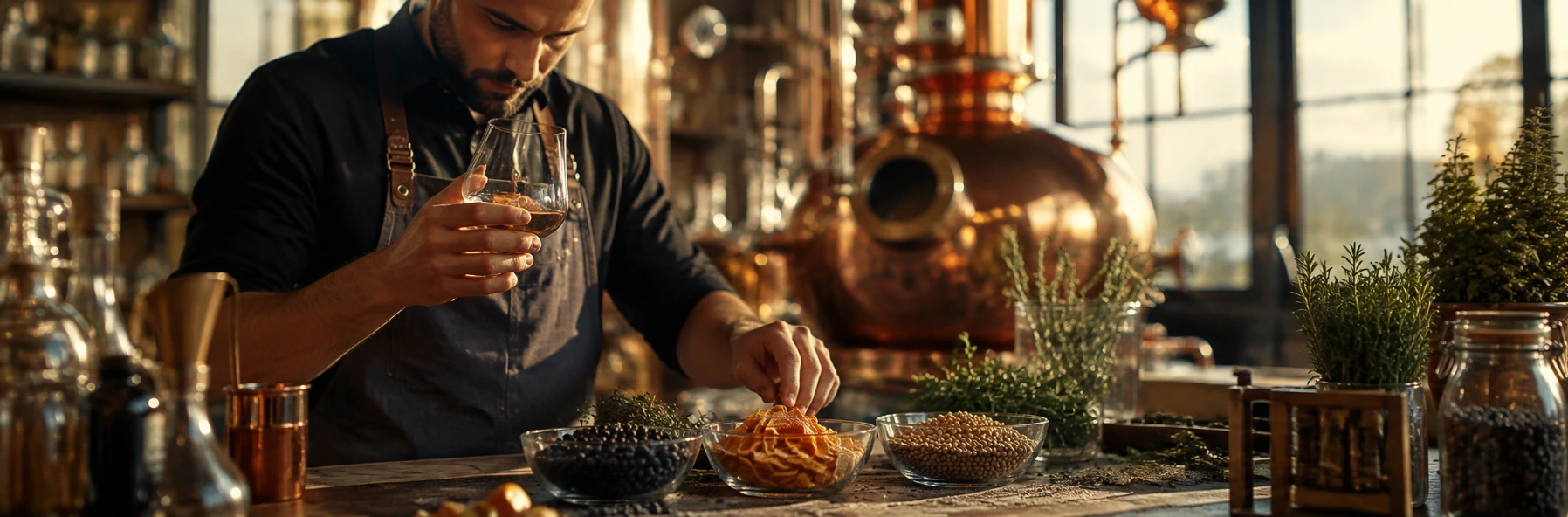
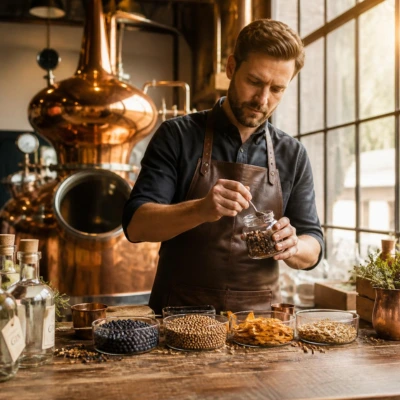
A gin producer is a distiller specialising in the elaboration of gin, a spirit obtained by redistilling a neutral alcohol in the presence of juniper berries and other aromatic botanicals. Juniper is the mandatory and identity ingredient of gin, but it is the unique combination of botanicals chosen by each distiller that creates the personality and style of each gin. With hundreds of botanicals available worldwide, the aromatic possibilities are almost infinite.
Gin is one of the fastest-growing spirits in the world since the 2010s. The global gin renaissance, driven by the craft movement and cocktail culture, has transformed this spirit — long associated only with Martinis and Gin Tonics — into an extraordinarily diverse and creative premium category.
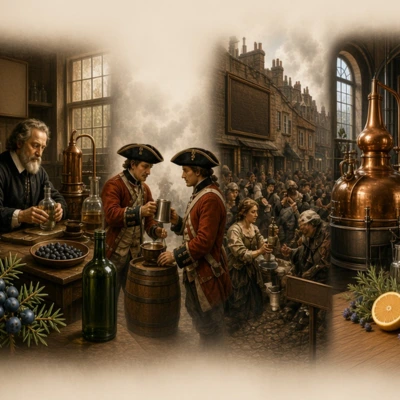
The history of gin begins in the Netherlands in the 17th century. The Dutch physician Franciscus Sylvius is often credited with inventing jenever, a malt spirit flavoured with juniper, initially used for medicinal purposes. British soldiers fighting in the Netherlands discovered jenever and brought it back to England, where it quickly became enormously popular.
In the 18th century, England experienced the famous Gin Craze: massive and uncontrolled consumption of cheap gin that plunged the London working classes into alcoholism. The Gin Act of 1751 regulated production and ended this crisis. It is in this context that the great London distilleries were born, developing the London Dry Gin style — dry and juniper-forward — which became the world reference.
The craft revolution of the 2000s-2010s radically transformed the market. Thousands of new micro-distilleries were born worldwide, experimenting with local botanicals, innovative techniques and unprecedented styles. Today, over 10,000 gin brands exist in the world.
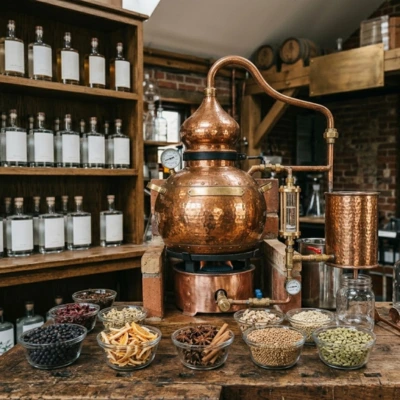
Gin production begins with the selection of botanicals, the creative heart of the profession. The distiller composes their unique recipe by combining the mandatory juniper with secondary botanicals: coriander, cardamom, lemon zest, angelica, orris root, cinnamon, pepper, local flowers, tea, and hundreds of other ingredients according to inspiration and terroir.
Redistillation takes place in a copper pot still, generally small-sized in craft distilleries. The botanicals can be placed directly in the pot with the neutral alcohol (maceration), or in a botanical basket traversed by the vapours (vapour infusion). Each method gives different aromatic profiles.
Blending and dilution with selected spring water are the final steps before bottling. Most gins are bottled without ageing, but aged gins, matured in casks, form a strongly growing premium segment.
According to data from the IWSR and the Gin Guild:
Over 80 million cases of gin sold worldwide in 2022 — IWSR
Over 10,000 gin brands referenced worldwide — Gin Guild, 2023
Spain is the world's leading gin consumption market — IWSR
The United Kingdom is the world's leading gin exporter — HMRC, 2022
Over 800 active gin distilleries in the United Kingdom in 2023 — WSTA
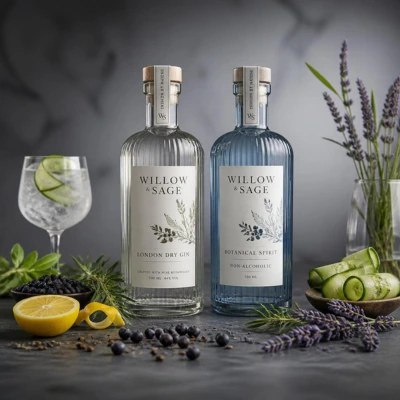
London Dry Gin — classic style, dry, juniper-forward, no aromas or sugar added after distillation
Plymouth Gin — PGI Plymouth, slightly earthy and soft style, Blackfriars Distillery
Dutch Jenever — original Dutch style, malt base, closer to whisky than modern gin
Contemporary / New Western Gin — non-traditional botanicals to the fore, discreet juniper, modern and creative style
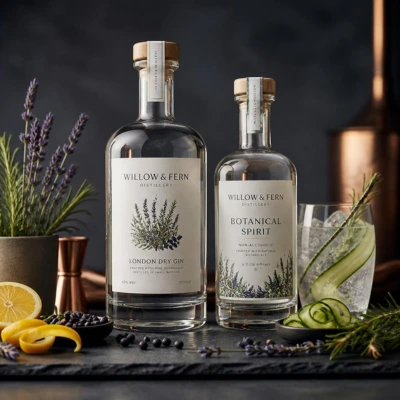
Mediterranean Gin — Mediterranean basin botanicals, lavender, thyme, rosemary, citrus, Spain and France
Sloe Gin — maceration of wild sloe berries in gin, fruity and tart liqueur
Aged Gin — oak or wine cask ageing, amber colour, strongly growing premium segment
Terroir Gin — 100% local botanicals, expression of a specific territory, strong trend
Pink Gin — naturally coloured by red fruits or rose berries, very popular, fruity and accessible style
Navy Strength Gin — minimum 57.15% vol., historical style linked to the British Royal Navy
Gin faces market saturation in certain countries. After the explosion in the number of brands in the 2010s, consumers are confronted with a plethoric offer and struggle to find their way around. Brands that do not clearly differentiate themselves through their story, terroir or unique aromatic profile struggle to establish themselves durably.
Premiumisation continues to pull the market upward. Gin consumers are increasingly sophisticated and seek premium expressions, limited editions and terroir gins that tell a story. This segment generates margins far superior to mainstream gins.
Finally, no-alcohol and low-ABV gins are experiencing spectacular growth, driven by the mindful drinking trend. Botanical alternatives without alcohol that reproduce the aromatic experience of gin are attracting a health-conscious clientele unwilling to give up the pleasure of a Gin Tonic.
Tanqueray — Cameronbridge, Scotland
Gordon's — Cameronbridge, Scotland
Beefeater — London, England
Hendrick's — Girvan, Scotland
Bombay Sapphire — Laverstoke Mill, England
Monkey 47 — Black Forest, Germany
Gin Mare — Vilanova i la Geltru, Spain
Nordes — O Grove, Galicia, Spain
G'Vine — Cognac, Charente, France
Citadelle — Merpins, Charente, France
Sipsmith — London, England
Malfy — Moncalieri, Piedmont, Italy
Four Pillars — Yarra Valley, Australia
Roku Gin — Osaka, Japan
Darnley's — Kingsbarns, Scotland
Nginious — Basel, Switzerland
Blackwood's — Shetland, Scotland
Distillerie de Paris Gin — Paris, France
Pfanner Gin — Lauterach, Austria
Oxford Artisan Gin — Oxford, England
Inverroche — Still Bay, South Africa
The Broker's — Birmingham, England
House of Hazelwood Gin — Speyside, Scotland
Silvio Nicolis Gin — Verona, Italy
Gin Premium Provence — Aix-en-Provence, France
Gin Rosa — Provence, France
Would you like your company to appear on this page? Listings are reserved for Pro Premium members of Wine BHM.
Join the selection of producers on the platform.
Join the network*Featured listings are reserved for Pro Premium members, subject to terms and conditions.