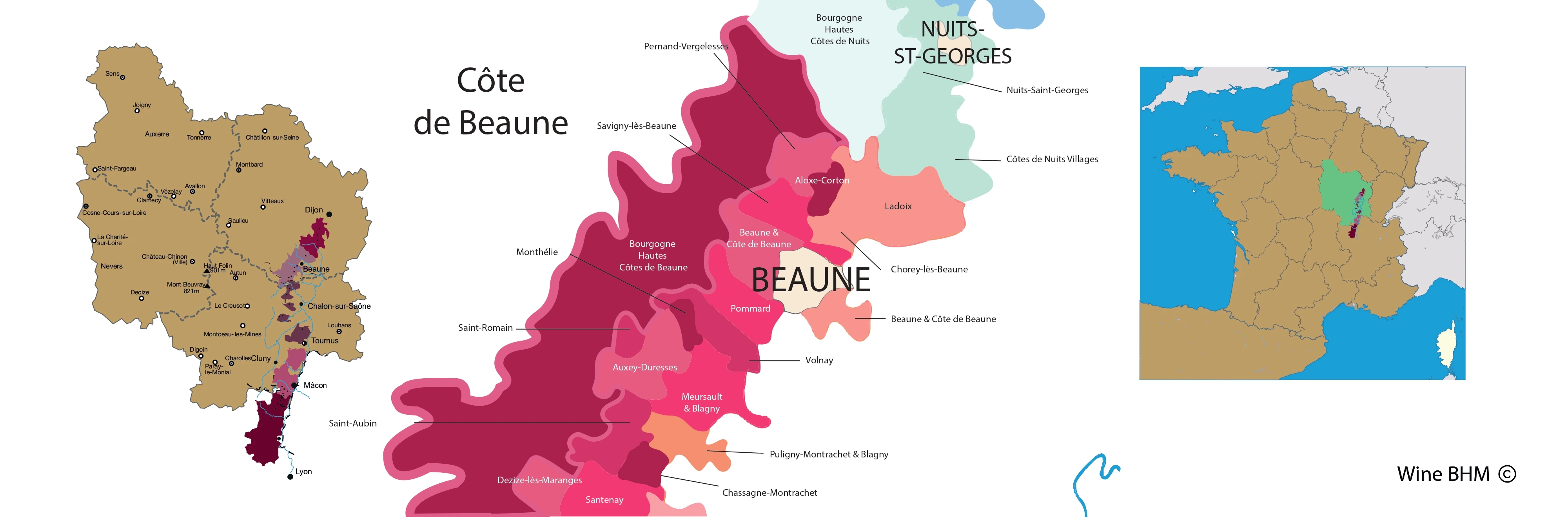
The origin of the vine in the Côte de Beaune is very ancient. It was the monks of Cîteaux and Cluny who first developed the multitude of clos in the region. At the beginning of the 12th century, the abbots of Cîteaux even created cellars at Meursault and Aloxe-Corton. The local production was formerly known as "vins de Beaune", well before the AOC was obtained in 1936. From the High Middle Ages, the Dukes of Burgundy appreciated these wines and greatly contributed to their renown, as did the monks.
The status of Beaune — as the historic and economic centre of viticultural Burgundy — also played a great role in the renown of these wines. In the 18th century, most of the great négociant houses settled here. These then created new markets in France and Europe, enabling the development of the region.
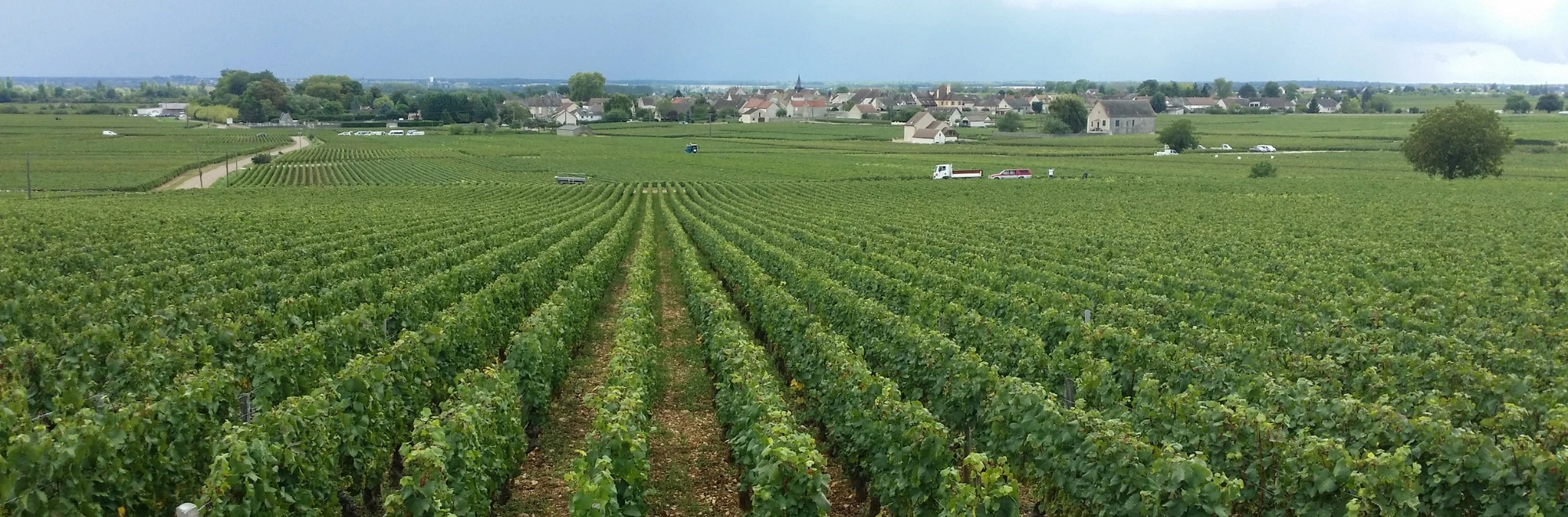
The surroundings of Beaune are characterised by rolling landscapes. The vineyard extends over a band some twenty kilometres long, no wider than a few hundred metres. There is a strong presence of combes resulting from the uplift of the Alps and the subsidence of the Saône plain. The subsoils, dating from the Upper Jurassic (150 million years), have a dominant of marly limestone and marls.
The vines are essentially planted on limestone hillsides. Despite this apparent unity, the Côte de Beaune is subject to fine terroir diversity. Oxfordian limestone is found at Corton, Bathonian at Chassagne-Montrachet, and marls at Corton-Charlemagne, Pommard and Meursault. The climate is oceanic with semi-continental tendency. Pinot Noir predominates around Beaune, although Chardonnay works wonders here too, as at Corton. From Meursault onwards, the white grape variety becomes predominant, at the origin of mythical appellations such as Bâtard-Montrachet.
The Côte de Beaune is home to world-renowned appellations. The white wines — whether from Montrachet, Meursault or Corton — release a powerful and complex aromatic bouquet. At once rich, supple and concentrated, they brilliantly combine firmness and softness. Their persistence is remarkable, making them excellent white wines for ageing. The red wines, from Pommard, Beaune or Volnay, blend suppleness and finesse. With their typical Pinot Noir fragrances, they present a coloured robe and a firm, fleshy palate.
The Côte de Beaune is home to the most precious and most sought-after white wines on the planet. Montrachet, shared between Puligny and Chassagne, is universally considered the world's greatest dry white wine. For importers and wine merchants specialising in great white wines, the Côte de Beaune is an absolute and essential reference. Its Premiers and Grands Crus of Meursault, Puligny-Montrachet and Chassagne-Montrachet are among the most collected and most traded wines at international auction, alongside the greatest reds of the Côte de Nuits.
Would you like your domaine or your company to appear on this page? Featured listings are reserved for Wine BHM Pro Premium members.

Join the selection of producers on the platform.
Join the network*Featured listings are reserved for Pro Premium members, subject to terms and conditions.