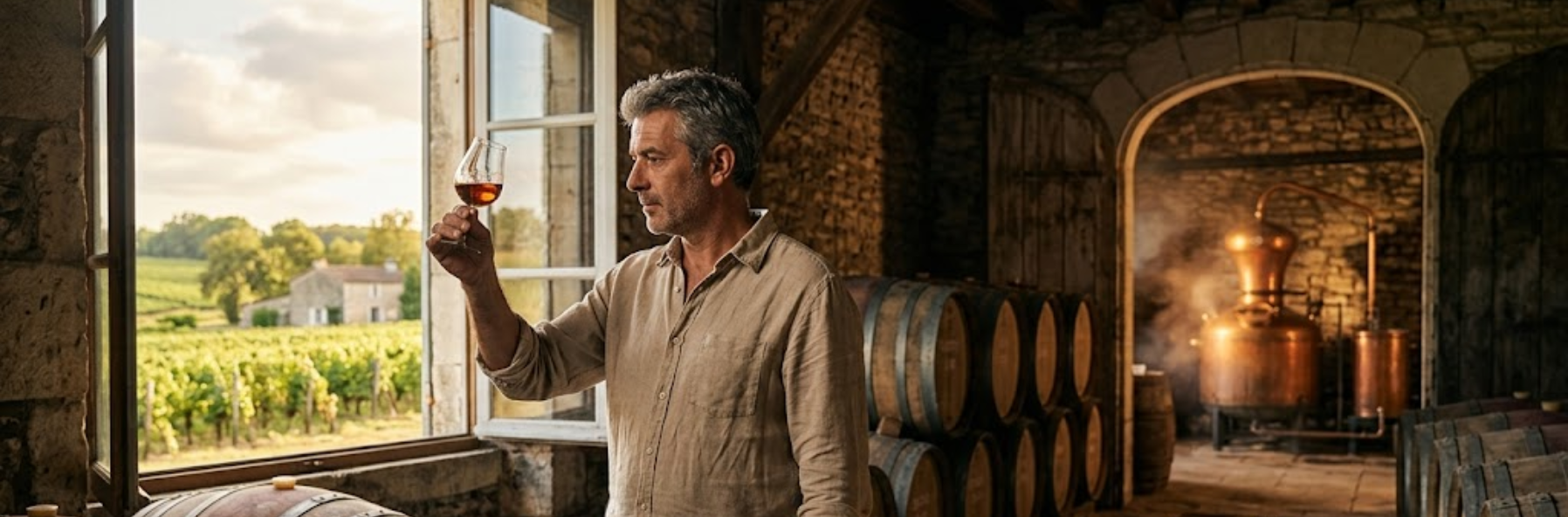
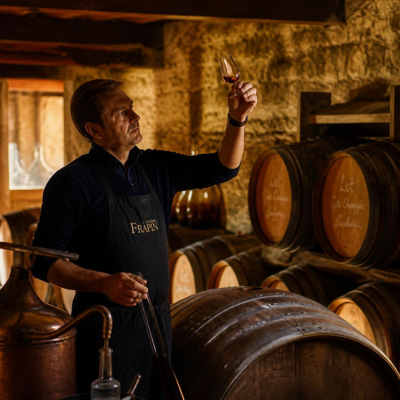
A Cognac producer is a professional specialising in the distillation and elaboration of Cognac, a wine spirit benefiting from a strictly delimited Appellation d'Origine Contrôlée (AOC) in the Charente and Charente-Maritime departments of France. This appellation is exclusively French — it is legally impossible to produce Cognac anywhere else in the world.
The Cognac producer masters an entire complex production chain: vine cultivation, vinification of acidic white wines, double distillation in copper Charentais pot stills, and mandatory ageing in Limousin or Tronçais oak casks. It is this combination of ancestral know-how that gives Cognac its unique character and worldwide reputation.
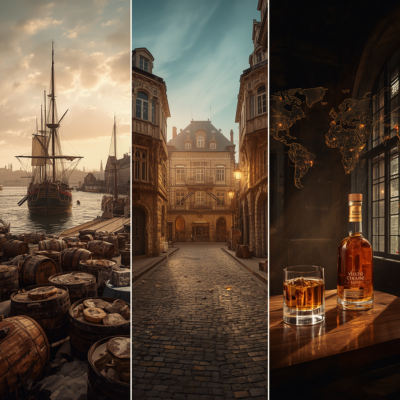
The Cognac region has been producing spirits since the 17th century. It was Dutch traders who, seeking to concentrate Charente wines for easier sea transport, accidentally discovered the virtues of double distillation. The concentrated wine, called brandewijn (burnt wine), gave birth to brandy and inspired the Charentais method.
In the 18th century, the great trading houses established themselves in Cognac: Martell in 1715, Rémy Martin in 1724, Hennessy in 1765, Courvoisier in 1809. These houses developed the blending and ageing techniques that would bring Cognac worldwide fame. The Cognac AOC was officially recognised in 1909.
Today, Cognac is one of the most exported spirits in the world, with key markets in the United States, China and Singapore. The region produces approximately 220,000 hectolitres of pure alcohol per year, of which over 97% is destined for export.
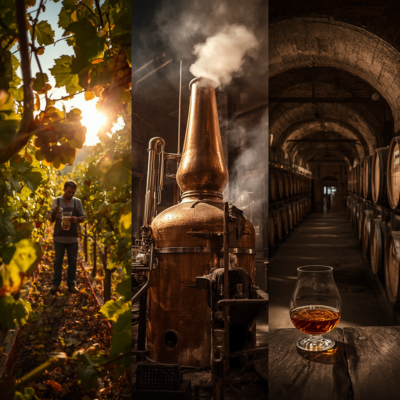
Cognac production follows a rigorous multi-step process. The harvest takes place in September-October, primarily using the Ugni Blanc grape variety (Saint-Émilion des Charentes), which represents over 98% of plantings. This variety produces a very acidic, low-alcohol wine — ideal for distillation.
Double distillation in the Charentais pot still is at the heart of the know-how. The first distillation produces the "brouillis" (approximately 28-32% vol.), the second produces the "bonne chauffe" (approximately 68-72% vol.). Only the "heart" of this distillation is retained — the "heads" and "tails" are discarded.
Ageing in oak casks is mandatory and determines the final quality. The classifications VS (Very Special, minimum 2 years), VSOP (minimum 4 years), XO (minimum 10 years since 2018) and Hors d'Âge reflect the duration and complexity of the ageing process. Some vintage Cognacs age for more than 50 years in the cellars.
ccording to the Bureau National Interprofessionnel du Cognac (BNIC):
Over 97% of Cognac production destined for export — BNIC, 2023
220,000 hectolitres of pure alcohol produced on average per year — BNIC
3.1 billion euros in export turnover — BNIC, 2022
4,500 winegrowers producing Cognac in the delimited region — BNIC
79,000 hectares of vines under the Cognac appellation — BNIC
A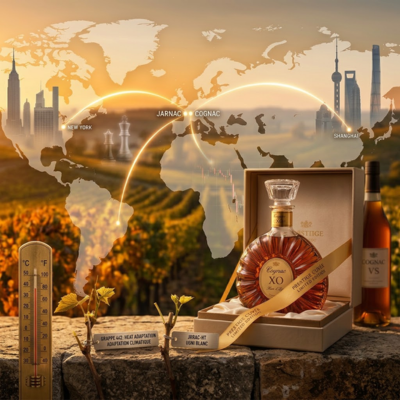
Grande Champagne — the most prestigious cru, chalky soils, fine and floral spirits, very long ageing potential
Petite Champagne — similar soils to Grande Champagne, slightly less warm
Borderies — the smallest cru, clay-limestone soils, round and floral spirits with faster ageing
Fins Bois — the largest cru, faster ageing, fruity profile
Bons Bois — lighter spirits, faster ageing
Bois Ordinaires — coastal cru, marginal production
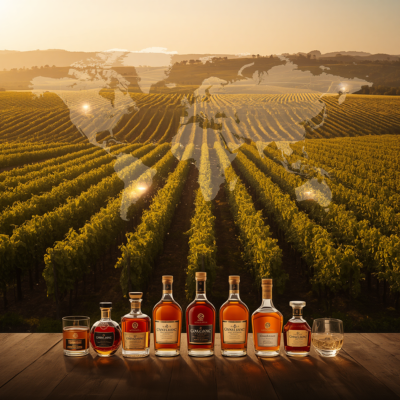
The Cognac market is heavily dependent on the American and Asian markets, which together account for over 70% of exports. This geographical concentration exposes the industry to geopolitical risks and customs policies — as demonstrated by Sino-American trade tensions and their impact on exports.
Premiumisation is the major underlying trend. Consumers, particularly in China and the United States, favour XO and Hors d'Âge cuvées over VS and VSOP. Houses are investing heavily in prestige cuvées and limited editions to meet this demand.
Finally, climate change represents a growing challenge for the Charente region, with increasingly hot summers modifying the aromatic profiles of the spirits and requiring deep viticultural adaptations.
Hennessy — Cognac, Charente, France
Martell — Cognac, Charente, France
Rémy Martin — Cognac, Charente, France
Courvoisier — Jarnac, Charente, France
Camus — Cognac, Charente, France
Hine — Jarnac, Charente, France
Delamain — Jarnac, Charente, France
Frapin — Segonzac, Grande Champagne, France
Pierre Ferrand — Merpins, Grande Champagne, France
Bache-Gabrielsen — Cognac, Charente, France
Deau — Archiac, Charente-Maritime, France
Merlet — Saint-Sauvant, Charente, France
Godet — La Rochelle, Charente-Maritime, France
Hardy — Cognac, Charente, France
Château de Cognac – Baron Otard — Cognac, Charente, France
Prince Hubert de Polignac — Cognac, Charente, France
Tesseron — Cognac, Charente, France
Léopold Gourmel — Cognac, Charente, France
ABK6 Abécassis — Cognac, Charente, France
Cognac Paulet — Cognac, Charente, France
Cognac Bertrand — Sonnac, Petite Champagne, France
Leyrat — Fins Bois, Charente, France
Cognac Guillaume — Segonzac, Grande Champagne, France
Briand — Cognac, Charente, France
Ragnaud-Sabourin — Ambleville, Grande Champagne, France
Cognac Peyrot — Barbezieux, Charente, France
Would you like your company to appear on this page? Listings are reserved for Pro Premium members of Wine BHM.
Join the selection of producers on the platform.
Join the network*Featured listings are reserved for Pro Premium members, subject to terms and conditions.