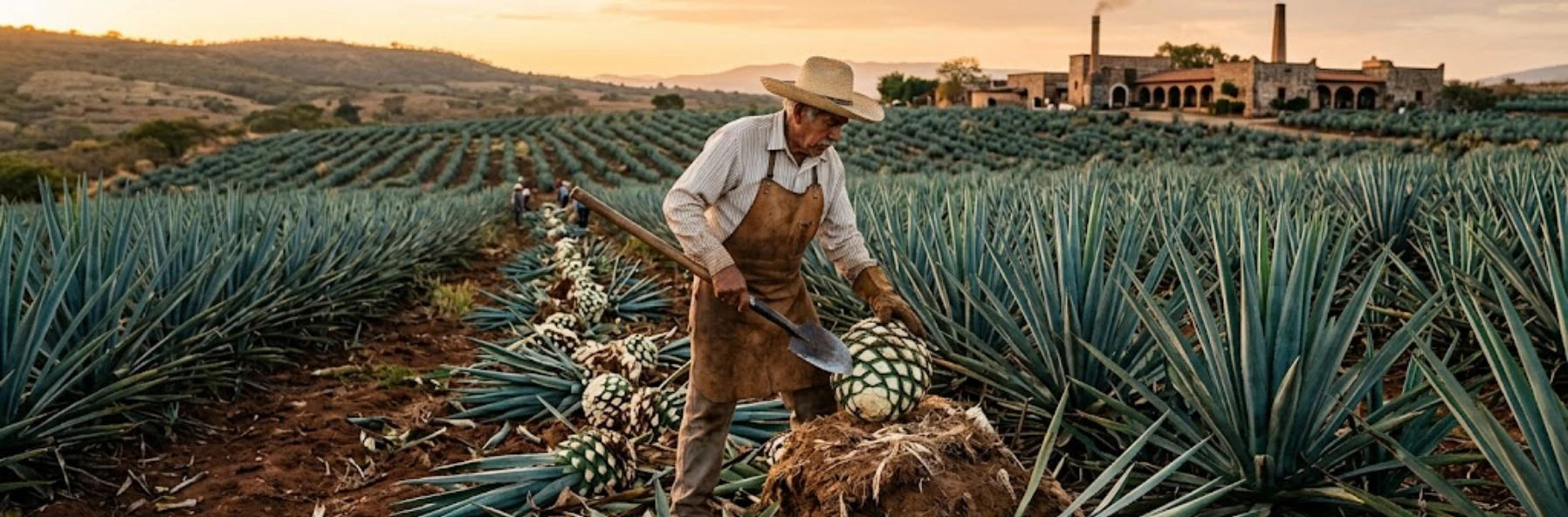
A Tequila producer is a distiller specialising in the elaboration of Tequila, a Mexican spirit benefiting from a strictly regulated Denominacion de Origen (DO), produced exclusively from blue Weber agave (Agave tequilana) in delimited geographical zones of Mexico, primarily in the state of Jalisco and a few neighbouring municipalities. Tequila is one of the most consumed spirits in the world and the most emblematic expression of Mexican distilling know-how.
The Tequila producer masters a unique production chain that begins with the cultivation of blue agave, a plant that takes 7 to 10 years to reach optimal maturity, and ends with the distillation of its fermented juice. It is this long cycle and this exceptional raw material that give Tequila its unique character and aromatic complexity.
The origins of Tequila date back to the pre-Hispanic peoples of Mexico, who already produced a fermented agave-based beverage called pulque. It was after the Spanish Conquest of the 16th century that European distillation techniques were applied to agave juice, giving birth to the first agave spirits.
The town of Tequila, in the state of Jalisco, became the centre of this production from the 17th century. The Cuervo family was one of the first to obtain an official production licence in 1758. In the 19th century, production was progressively commercialised and structured. The Denominacion de Origen was officially established in 1974, protecting the name and production territory.
In the 20th century, Tequila conquered the American and world markets, particularly through the Margarita cocktail and the festive culture surrounding it. Since the 2000s, a spectacular premiumisation movement has transformed Tequila into a prestige spirit, with artisanal 100% agave expressions rivalling the world's finest spirits.
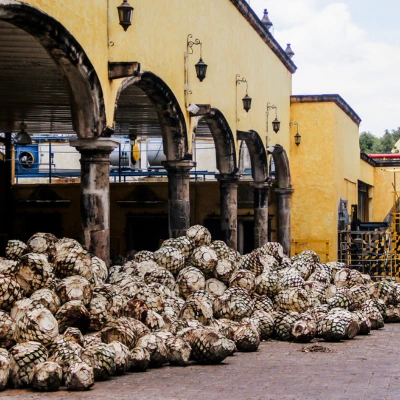
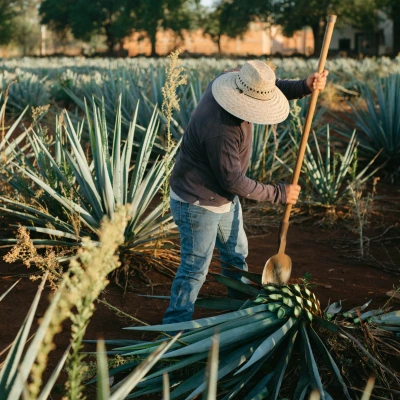
Tequila production begins with the harvest of blue agave. The jimador, a specialist harvester, cuts the long spiny leaves of the plant to extract the pina, the bulbous heart of the agave which can weigh from 30 to 90 kg. This manual harvest requires great expertise to choose plants at the right moment of maturity.
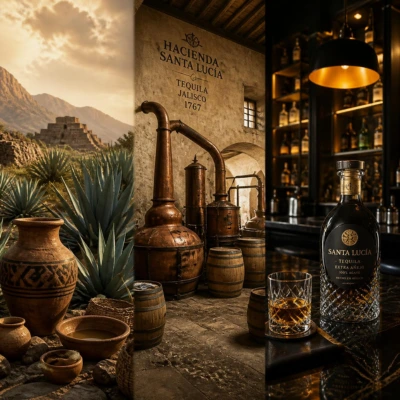
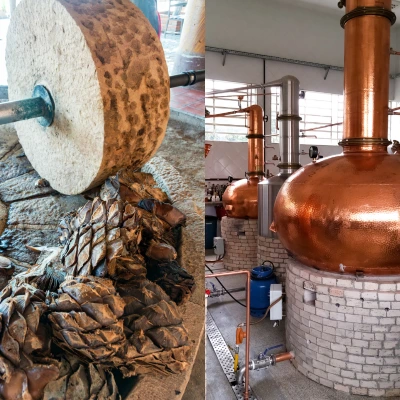
The pinas are then cooked, traditionally in stone or brick ovens (hornos) or, industrially, in steam autoclaves. This cooking transforms the complex sugars (inulin) into fermentable sugars. The extracted juice, called aguamiel, is then fermented and distilled in pot stills or columns.
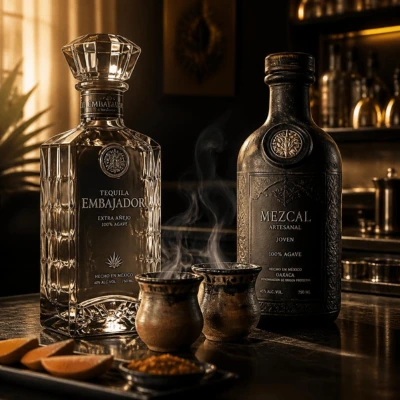
Ageing determines the classification: Blanco (unaged), Reposado (2 months to 1 year in cask), Anejo (1 to 3 years), Extra Anejo (over 3 years). 100% agave Tequilas, without added sugars, represent the premium segment and must be bottled in Mexico.
According to data from the Consejo Regulador del Tequila (CRT):
Over 400 million litres of Tequila produced in 2022 — CRT
Over 1,400 Tequila brands registered — CRT, 2023
The United States absorbs over 80% of Tequila exports — CRT
Over 200 distilleries (destilerias) accredited in the DO zone — CRT
100% agave Tequila now represents over 60% of exported volumes — CRT, 2022
Tequila Blanco / Silver — unaged or aged less than 2 months, transparent, pure agave aromas
Tequila Reposado — aged between 2 months and 1 year in oak cask, balance of agave and wood
Tequila Anejo — aged between 1 and 3 years, developed aromatic complexity, woody and vanilla notes
Tequila Extra Anejo — aged over 3 years, ultra-premium segment, great complexity
100% agave Tequila — no added sugars, guaranteed superior quality, bottled in Mexico
Mixto Tequila — minimum 51% agave, remainder from other fermentable sugars, mass-market segment
Cristalino Tequila — Anejo filtered through activated charcoal for a transparent colour, emerging trend
Artisanal Tequila — small-volume production, traditional methods, hornos cooking, copper pot still distillation
Tequila faces an agave availability crisis. The strong growth in world demand has created tension on blue agave stocks, whose 7 to 10-year cultivation cycle prevents rapid supply adjustment. This pressure on the raw material is pushing prices up and favouring producers with their own agronomic base.
Celebrity Tequila has become a major market phenomenon. Stars such as George Clooney (Casamigos), Dwayne Johnson (Teremana), Justin Timberlake (Sauza 901) and LeBron James (Lobos 1707) have launched their own brands, attracting a considerable aspirational clientele and transforming Tequila into a premium lifestyle symbol.
Finally, the rise of Mezcal, the artisanal and more authentic cousin of Tequila, is diverting some spirits enthusiasts towards even more complex and terroir-driven expressions. Some Tequila producers are diversifying their offer by also launching Mezcals to capture this fast-growing market.
Patron — Atotonilco el Alto, Jalisco, Mexico
Casa Sauza — Tequila, Jalisco, Mexico
Jose Cuervo — Tequila, Jalisco, Mexico
Herradura — Amatitan, Jalisco, Mexico
Don Julio — Atotonilco el Alto, Jalisco, Mexico
Casamigos — Jalisco, Mexico
Clase Azul — Santa Maria Canchesda, Mexico
Casa Dragones — San Miguel de Allende, Mexico
Teremana — Jalisco, Mexico
Tequila Ocho — Los Altos, Jalisco, Mexico
Tequila Fortaleza — Tequila, Jalisco, Mexico
Espolon — San Marcos, Jalisco, Mexico
El Tesoro — Arandas, Jalisco, Mexico
Olmeca Altos — Los Altos, Jalisco, Mexico
Cazadores — Arandas, Jalisco, Mexico
Siete Leguas — Atotonilco el Alto, Jalisco, Mexico
Milagro — Los Altos, Jalisco, Mexico
Arette — Tequila, Jalisco, Mexico
Komos — Jalisco, Mexico
Volcan de mi Tierra — Tequila, Jalisco, Mexico
Lobos 1707 — Jalisco, Mexico
Cincoro — Jalisco, Mexico
1800 Tequila — Jalisco, Mexico
Luna Azul — Jalisco, Mexico
G4 Tequila — Atotonilco el Alto, Jalisco, Mexico
MADE Tequila — Jalisco, Mexico
Would you like your company to appear on this page? Listings are reserved for Pro Premium members of Wine BHM.
Join the selection of producers on the platform.
Join the network*Featured listings are reserved for Pro Premium members, subject to terms and conditions.