In the past, barrels were used to transport wine. The barrels currently in use date back to the 17th century. The English great lovers of Bordeaux wines got their supplies by boat and for this reason it was necessary to find an appropriate container. The cooper must find the right balance between wine and wood, he must find the ideal toast to give the aromas desired by the châteaux. The precision of the heating of the barrel is essential, because it is this which will determine the quality of the barrel and therefore of the wine. It is as in perfumery to combine the quality of the raw material and the art of man to obtain high quality barrels.
On the market there are several volumes of barrels that vary between 50, 225, 228, 300, 350, 400, 500, 600, 700 liters. The new Bordeaux barrel weighs around 45 kg empty.
Different types of oak (French and American are the most used and come from different regions (Limousin, Allier, Nevers, Tronçais, ...). Oak woods can impart different levels of flavor to wine such as vanilla. The wine in the barrel undergoes subtle chemical changes which lead to greater complexity and a softening of the tannins and flavors present at the end of fermentation. French oak is the most popular for winemaking, it tends to add more subtle flavor components than other types of oak. Chardonnay and Pinot Noir go well with French oak which absorbs more than other varieties of oak. Aging in barrels allows a very slow introduction of oxygen into the wine and it communicates the character of the wood in the wine, this process decreases after several aging of wines in barrels, and this is why the Grands Crus Classés, put their wines in new barrels for each new vintage. For red wines, oxidation takes place during the aging of the wine in the barrel. This oxidation leads to a decrease in astringency, increased stability and color and the development of fruit aromas. Oak wood is made up of several classes each contributing its own flavor or textural note to red and white wines. The most familiar flavor is vanilla which imparts sweet aromas, hints of tobacco and tea and a structural complexity of tannin that blends with fruit tannin for red wines. Depending on the techniques used to make the barrels, the chemistry of the oak barrel can produce different flavors and textures. The choice of wood for the manufacture of barrels is essential, it is for wood as well as for wine. The oaks used by the cooperages are at least 150 years old. The most famous oaks in the world for the manufacture of barrels come mainly from the Center of France.
The terroir on which the oaks grow has a fundamental impact on the quality of the wood which results in the quality of the barrel and therefore of the wine. For example, an oak which grows on a "Pedunculate" mineral soil is different from a "Sessile" oak which grows on a clay-limestone soil, which provides totally different aromas and tastes, they are found in Europe. Red oaks and white oaks come from North America, they are richer in tannins and are used for strong alcohols. We use the noble part of the tree, that is to say the middle of the oak tree, i.e. 20% of the tree, to make a wine barrel, the rest, which costs less to buy, is used to make parquet, firewood or furniture. The noble part of the oak tree is the straightest part of the tree, without leaks in the barrels and without knots. The grain of the tree: its fineness is very important in the choice of wood, the tighter the rings are, this indicates that the tree has grown slowly. It is very important to sort the batches of wood to choose the fine grains in the tree to optimize the exchange between the wine and the barrel.
Merranderie consists of producing Merrains, these are rectangular wooden slats that come from the splitting of wood (wood split with a hammer or a splitting axe. For the manufacture of the barrel we use Merrains, oak wood cut into boards 18 to 35 millimeters thick and a width of 40 to 120 millimeters. The Drying of the Merrains. It takes 36 months of rest in the open air to remove the bitterness and astringency to refine the aromas and tone of the wood.
It takes 36 months of rest in the open air to remove bitterness and astringency to refine the aromas and tone of the wood.
As soon as the staves have reached maturity, they are transformed into staves, these are pieces of oak wood that form the wall of the barrel, there are about thirty staves for the manufacture of the barrel. The staves must respect the grain of the wood in order to guarantee an excellent seal during the bending of the wood
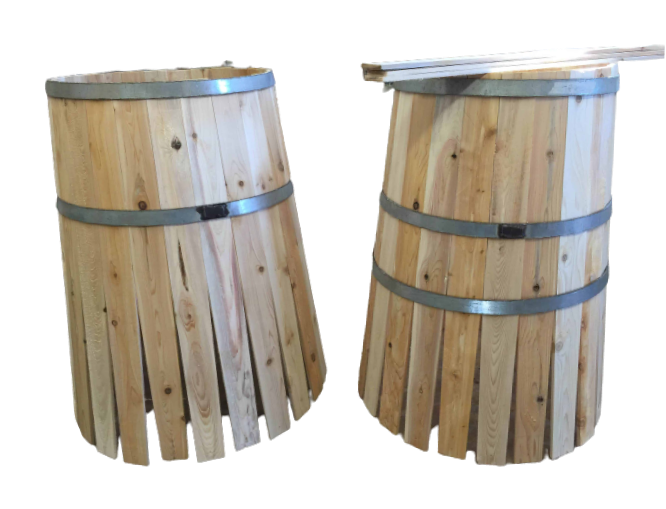
First of all, we start with the “Rose setting”, it is the stage which consists in bringing together the staves in a truncated cone in a circle of metal to hold them temporarily.
As soon as the "Mise en Rose" is finished, we proceed to the heating, it’s means that we heat the inside of the barrel to bend the wood, this allows the wood to be cooked in depth and give all its aromatic qualities to allow it to go well with the wine, according to the wishes of the Châteaux.
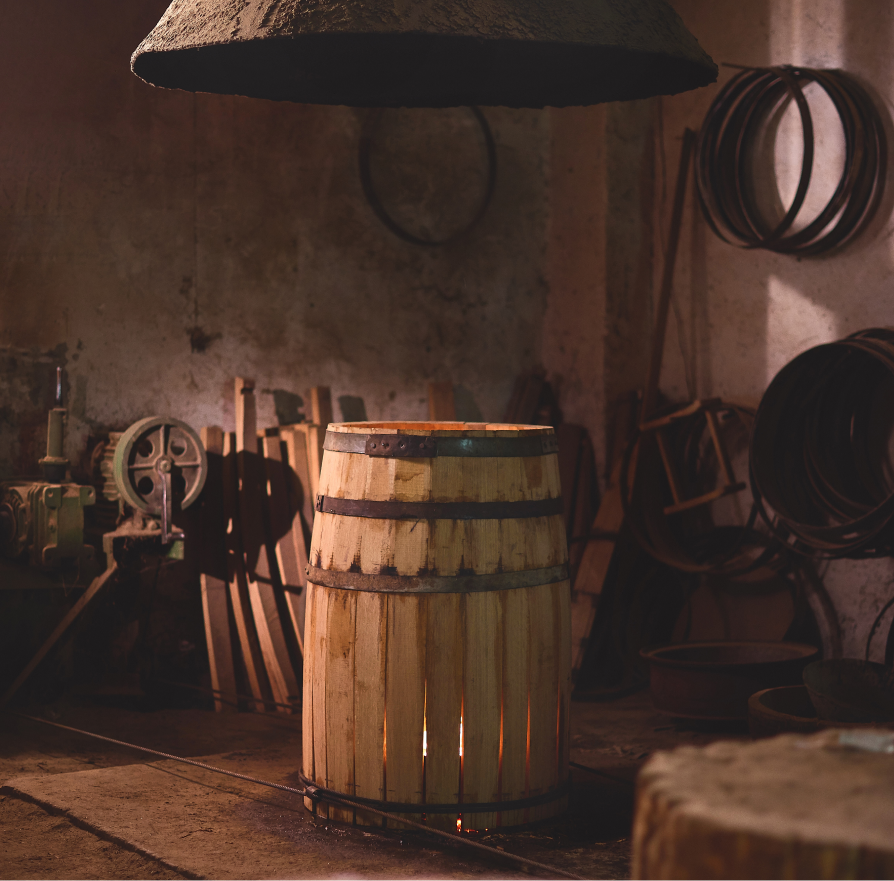
The bottoms are assembled by dowels and are inserted manually into the jable using a lag screw.
To check the tightness of the barrel, pressurized hot water is introduced inside the barrel. Most fine wines are aged in oak barrels. The aging of the wine before it is bottled after the fermentation is complete, then the wine is racked many times to remove the larger solids, the young wine is generally rough, raw and green and the oak barrels are used for their aromatic characteristics, it is more resistant to micro-organisms, it is practically not putrescible, and it also offers the porosity and the tightness which is necessary for the conservation of the wine in the barrel. Often the wine properties use barrels from different manufacturers, in fact they associate the barrels as one associates the wines with the different grape varieties.
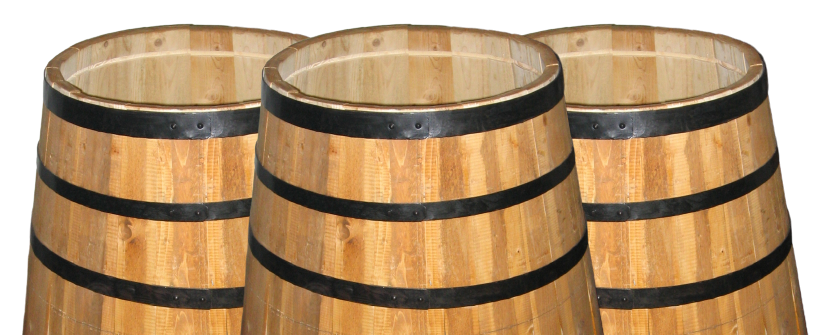
Once the staves are planed and sorted, they are assembled to give the shape of the barrel and above all. It takes about 10 to 12 "Staves" slats to assemble and shape them during the bending operation, to do this you have to heat the staves, once this operation is finished, two iron circles are placed practically at each end. of the barrel, then the barrel is heated inside, the more or less powerful heating will give the smoky taste found in the wine. Once finished we will affix six galvanized and riveted circles, three at each end of the barrel.
List of woods used to make Barrels
Acacia
Aulne
Châtaignier
Chêne
Frêne
Acacia
Aulne
Châtaignier
Chêne
Frêne
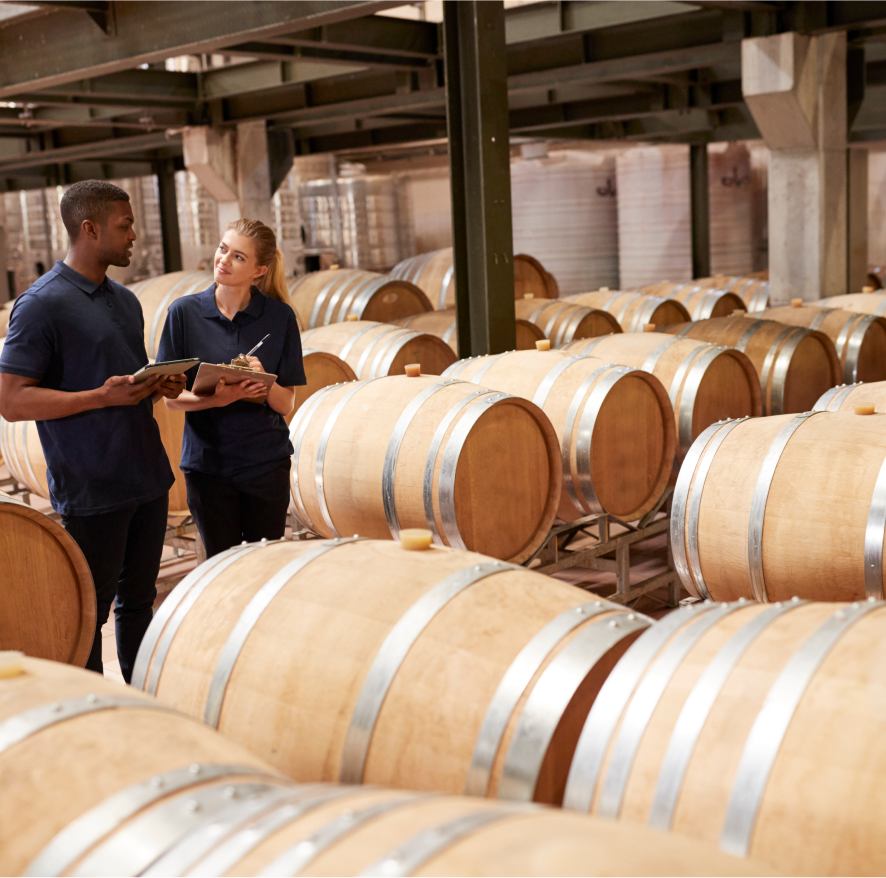
Many people think that tannins come from the skins and stems of grapes, but in fact some tannins come from the oak barrels in which wines are aged.
Felling: This is the action of bringing down the tree by bucking it.
Sapwood: This is the soft part of the wood, whitish, which forms each year under the bark around the heart.
Tree sapling: Tree preserved during the cutting of wood and intended to become a high forest tree.
Log: Section of a log.
Billon: Piece of squared wood or not.
Oenological woodwork: Alternatives to oak barrels also called "Copeaux" or "Chips" presented in powder form.
Lumber: Wood intended for construction.
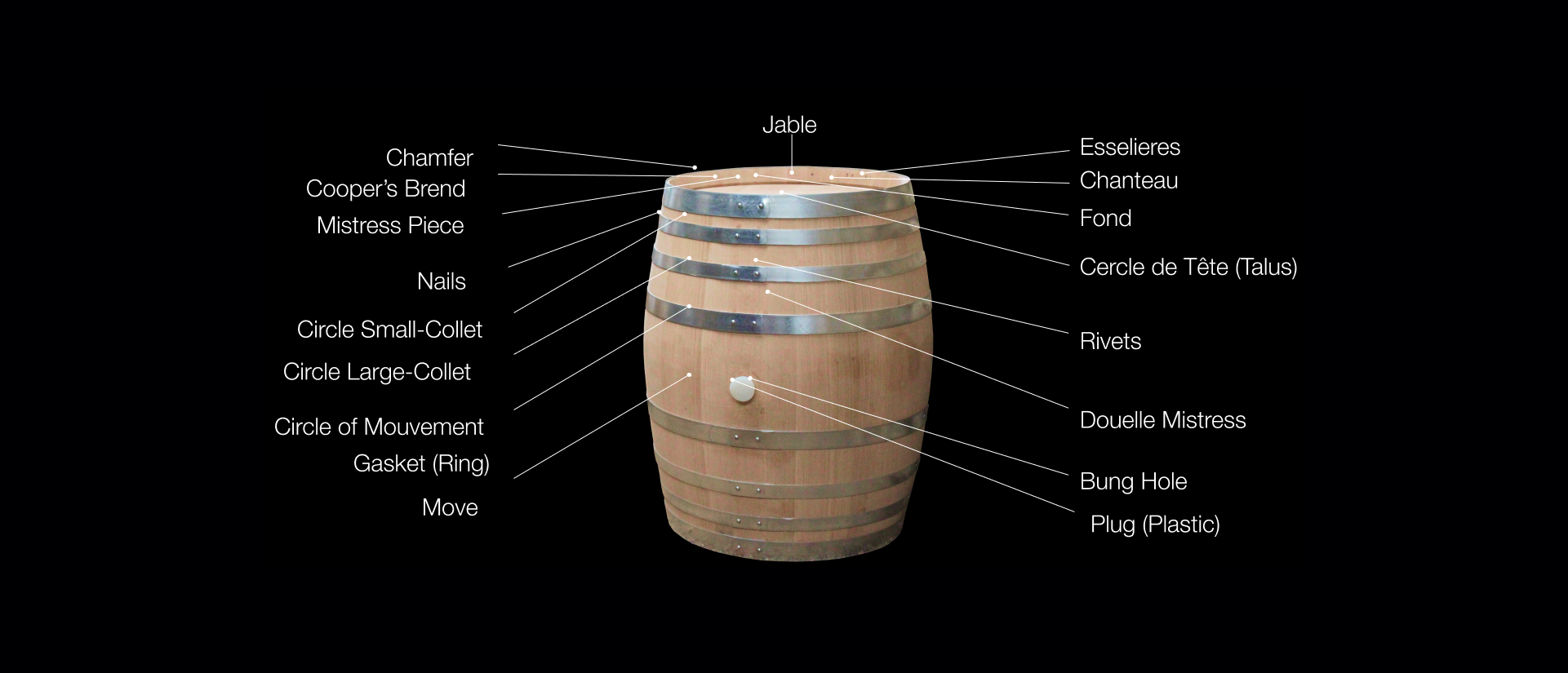
Plug: Stopper which is used to close the opening made on the bung of the barrel through which the barrel is intoned.
Bouge: Most domed part of the barrel.
Chablis: Tree knocked down by the wind, the storm.
Chamfer: Bevelled part at the end of the staves.
Heating: This is the cooking inside a barrel once the barrel has been assembled. A brazier loaded with pieces of oak heats the interior of Les Douelles. Depending on the degree of toasting, the wood will give complementary aromas to the wine, more or less toasted, grilled or caramelized.
Low heating: Gives a lot of tannins and few aromatic substances, slightly vanilla aroma.
Medium heating: This is the synthesis of intense aromas, maximum with a normal contribution of tannins.
Strong heating: These are notes of embers and caramel that are very present, complexity is less than during an average toast. It is up to the winemaker, depending on the vintage and his style of vinification, to make the choice of his type of barrels by choosing the provenance of the oak and by its degree of toasting.
Pedunculate Oak: The Pedunculate Oak is a deciduous tree from the temperate regions of the northern hemisphere, belonging to the Fagaceae family.
Sessile oak: The Sessile oak or sessile oak (Quercus petraea) is a tree from the forests of the temperate regions of the northern hemisphere belonging to the Fagaceae family.
Cutting: Place where trees are felled or to be felled.
Regeneration cut: All the cuts carried out throughout the development of the high forest to promote the continuous renewal of the stands.
Cuber: This is the estimate of the volume of wood represented by a tree.
Skidding: Action of transporting felled trees from the forest to the loading sites.
Skidder: Equipped tractor that performs skidding.
Dolage: Machining operation of the convex and concave parts of the stave.
Doleuse: Machine that machines the convex and concave parts of the stave.
Douelle or Douve: Piece of wood cut in the stave which is used for the construction of the barrel.
Grain of wood: Direction of the fibers of the wood.
Log: Felled tree stripped of its unbarked branches.
Jable: Groove dug at the ends of the staves of a barrel to embed the bottoms. Jointing: Action of giving the staves the necessary slope which will ensure the sealing of the barrel.
Splicer: Machining machine performing the splicing.
Merrain: Plank of oak obtained by splitting and intended for the construction of wine barrels.
Mise en rose: Assembly of Douelles made around a metal circle.
Knots: Protuberance that forms on the trunk of a tree.
Oenological - Science for the study of the production and conservation of wine.
Organoleptic: This is the character of a criterion of a product that can be appreciated by the human senses such as: touch, taste, smell.
Pins: Small knots going inside the wood.
Barrel: Synonyms: cask, cask, barrel.
Coppice Sous Furaite: Forest managed as a coppice but leaving the beautiful trees to develop.
Coppice: Wood on which trees from old stumps with close spaces are cut.Tannins: Organic substance contained in many plants, in bark and wood (oak, chestnut, acacia, quebracho). There are several large houses with international reputations that manufacture and export barrels around the world. Contact-us to list your business
Aaqua Tools – California, USA
Alphaoeno – Bordeaux, France
Barrel Builders – Helena, California, USA
Boise – Santa Rosa, California, USA
Bouchard Cooperages – Napa, California, USA
Canton Cooperage – Santa Rosa, California, USA
Creative Oak – Benicia, California, USA
Enartis USA – Windsor, California, USA
Kelvin Cooperage – Louisville, Kentucky, USA
Live Oak Bank – Wilmington, North Carolina, USA
Midwest Supplies – Minneapolis, Minnesota, USA
Oak Barrels Ltd – Harlingen, Texas, USA
Oak Infusion Spiral – Avon, Minnesota, USA
Oenofrance USA LLC – Petaluma, California, USA
Skolnik – Chicago, Illinois, USA
The Oak Higbee – Missouri, USA
UPM Raflatac – Mills River, North Carolina, USA
Bordeaux Tonneaux – Vertheuil, France
Damy Tonnellerie Père & Fils – Bourgogne, France
HA et Location – Bordeaux, France
TB Tonnellerie – Les Artigues de Lussac, Bordeaux, France
Tonnellerie Anjems – Cognac, Charente, France
Tonnellerie Quintessence Bordeaux – Sonoma, California, USA
Oak Solution Group – Napa, California, USA
Pacific Wine Making – Sherwood, Oregon, USA
The Barrel Mill – Avon, Minnesota, USA
Tonnellerie O – Benicia, California, USA
Tonnellerie Radoux – Santa Rosa, California, USA
Vino Vessel Inc. – Paso Robles, California, USA
Chêne Distribution – Thales, Bordeaux, France
Groupe Charlois – Bourgogne, France
TFF Group – Saint-Romain, France
Tonnellerie Baron – Cognac, Charente, France
Oak Barrels Winecraft – Berkeley, California, USA
American Oak Whiskey Barrels – New York, USA
BSB Bois et Sciage de Bourgogne – La Machine, France
BCT Solutions – Santa Rosa, California, USA
Bonar Plastics – Chicago, Illinois, USA
BSG Wines – Napa, California, USA
Cooperages 1912 – Napa, California, USA
East Coast Wood Barrels – Medford, New York, USA
Heritage Barrels – Napa, California, USA
Lafitte Cork and Capsule Inc. – Napa, California, USA
Northern Brewer – Roseville, Minnesota, USA
Mel Knox Barrel Broker – San Francisco, California, USA
Groupe Charlois – Bourgogne, France
TFF Group – Saint-Romain, France
Tonnellerie Baron – Cognac, Charente, France
BSB Bois et Sciage de Bourgogne – La Machine, France
Tonnelleries de Bourgogne – France
Tonnellerie Berthomieu – La Charité-sur-Loire, France
Tonnellerie Cadus – Ladoix-Serrigny, France
Tonnellerie Devienne – Languedoc-Roussillon, France
Tonnellerie François Frères – Saint-Romain, France
Tonnellerie Rousseau – Bourgogne, France
Tonnellerie Seguin Moreau – Cognac, France
Tonnellerie Vernou – Cognac, Charente, France
Tonnellerie Villard – Saint-Étienne-de-Saint-Geoirs, France
Tonnellerie Allary – 17520 Archiac, France
Tonnellerie Love Brewing UK – Chesterfield, S40 2BY, UK
Tonnellerie de l’Entre-Deux-Mers TEDEM – Bordeaux, France
Tonnellerie de Jarnac – Cognac, Charente, France
Tonnellerie Demptos – Bordeaux, France
Tonnellerie du Monde – Bordeaux, France
Tonnellerie Jacques Garnier – Salignac-sur-Charente, France
Tonnellerie Saury – Bordeaux, France
Tonnellerie Sirugue – Nuits-Saint-Georges, Bourgogne, France
Tonnellerie Vicard – Cognac, France
Barriques et Tonneaux en vieux bois de chêne - Seanroyale Kft Hongrie
TRUST Hongrie (Barrel Maker) - Szigetvar, Dencshazai Ut 12 Hongrie
Tonnellerie Love Brewing UK Chesterfield, S40 2BY UKAllary 17520 Archiac France
Oak Solution Group - Wine's Secret Tirat Yehuda Israël
Teres - Bulgarie et Californie
Valoga Barrels (Bulgarie) - Trudovec Bulgarie
Toneleria Nacional - Fûts Mistral (Chili)
Fûts de chêne à vin - Krusevac Serbie

Join the selection of producers on the platform.
Join the network*Featured listings are reserved for Pro Premium members, subject to terms and conditions.