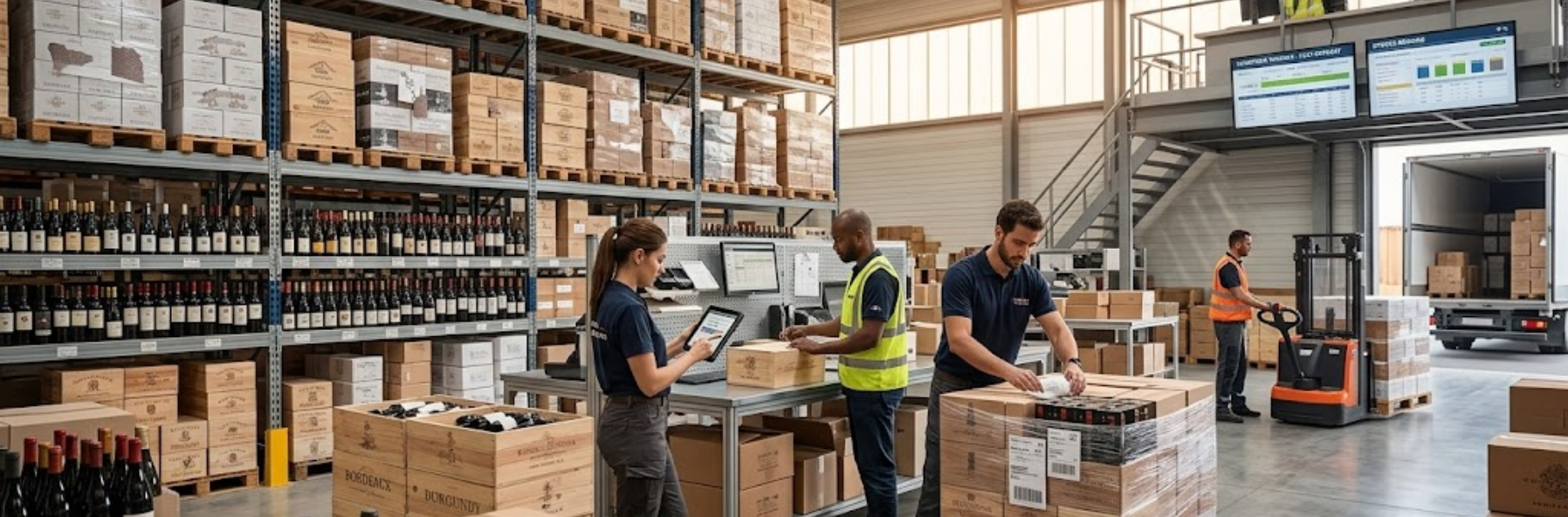
A wine logistics platform is a specialist provider that handles the reception, storage, order preparation and shipment of wines & spirits on behalf of producers, négociants and importers. It forms the central link in the distribution chain between the producer and their customers: wine shops, restaurateurs, supermarkets, e-commerce platforms and foreign importers.
Unlike a simple warehouse, the wine logistics platform offers a range of value-added services: computerised stock management, traceability by lot and vintage, personalised order preparation, packaging, bespoke labelling and multichannel shipment. It allows the producer to focus on their core business by outsourcing all logistical complexity.
The first logistics platforms specialising in wine appeared in France in the 1970s and 1980s, driven by the rise of mass retail and the need to manage massive flows of bottles between producing regions and major consumption cities. Bordeaux, Burgundy and Champagne developed their own regional logistics infrastructures.
The globalisation of trade in the 1990s and 2000s pushed operators to specialise in export flows, with the creation of platforms dedicated to maritime container consolidation. Today, the boom in wine e-commerce has added a new dimension: managing single-unit or small-batch shipments directly to private consumers.
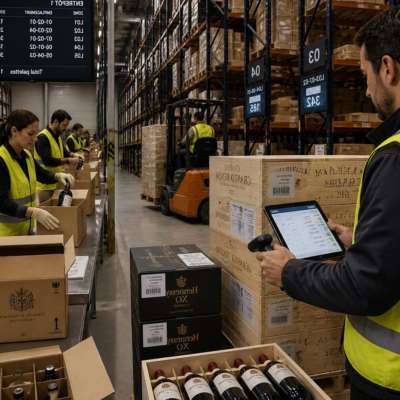
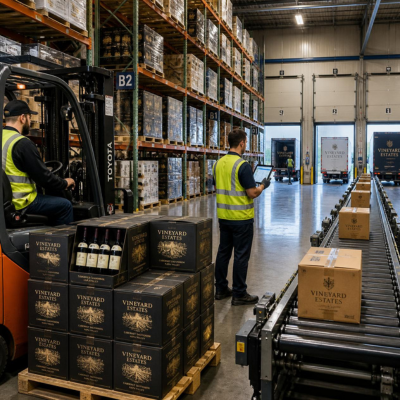
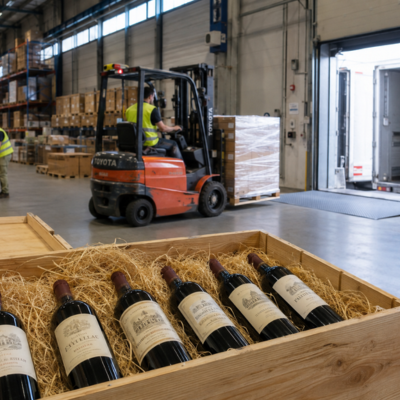
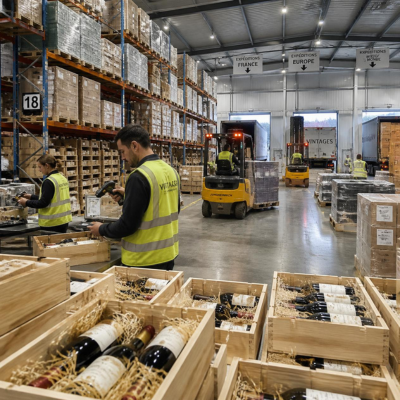
The logistics platform receives goods from producers, checks them, references them in its warehouse management system (WMS) and stores them in optimal temperature and humidity conditions. It prepares orders according to delivery notes, handles packaging and regulatory labelling according to destination markets, then organises shipment with partner transporters.
The management of excise duties and movements under fiscal warehouse is a key competency. In France, wines & spirits are subject to excise duties that are only payable upon leaving the approved fiscal warehouse. A platform holding this approval allows its clients to defer payment of these taxes, a considerable financial advantage for négociants and importers.
Over 4 billion bottles pass through logistics platforms in France each year
The outsourced wine logistics market is estimated at over 2 billion euros in Europe
Over 60% of producers of more than 100,000 bottles outsource all or part of their logistics
Wine e-commerce generated 35% growth in volumes processed by logistics platforms between 2020 and 2023
Approved fiscal warehouse: storage under excise duty suspension, mandatory customs approval
National distribution platform: serving wine shop, restaurant and supermarket networks
Export platform: maritime container consolidation and export customs formalities management
E-commerce platform: single-unit order preparation, express shipment to private consumers
Temperature-controlled platform: storage and shipment in positive cold for fragile wines
Co-packing centre: gift set assembly, bespoke packaging, personalised presentation
Bulk platform: reception and shipment of bulk wines, flexitanks and tankers
International logistics hub: multimodal platform connected to ports, airports and rail networks
Returns management platform: unsold stock processing, reconditioning and regulatory destruction
Fine wine auction logistics: secure storage, enhanced traceability, specific grand cru insurance
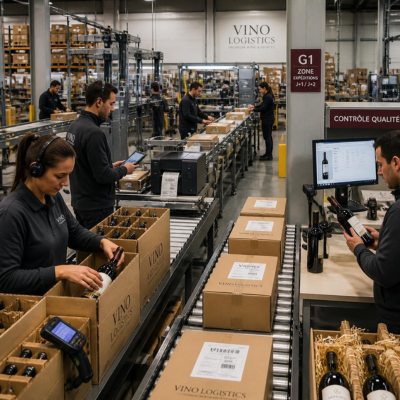
The rise of e-commerce has profoundly reconfigured wine logistics platforms. The demand for single-unit order preparation, with next-day or two-day delivery, careful packaging and a premium unboxing experience, requires significant investment in automation and preparation team training.
Enhanced traceability has become an unavoidable requirement. Major estates and négociants require complete traceability by lot, vintage and sometimes by individual bottle from their logistics providers, compatible with new connected label systems and European regulatory requirements.
Finally, logistics pooling is developing. Faced with rising costs, several small and medium-sized producers from the same region are joining forces to share a common logistics platform, reducing fixed costs while benefiting from professional infrastructure they could not finance individually.
STEF, Paris, France (temperature-controlled logistics)
Clasquin Wine & Spirits, Lyon, France
Vinlog, Mérignac, Gironde, France
Bordeaux Logistique, Bordeaux, France
Hillebrand Gori, Mainz, Germany
LGI Wine, Melbourne, Australia
Wine Shipping, Napa Valley, California, USA
CEVA Logistics Wine, Baar, Switzerland
Kuehne+Nagel Wines & Spirits, Schindellegi, Switzerland
Vinotrans, Barcelona, Spain
Transalliance Wine, Beaune, Burgundy, France
Saveurs Transport, Mâcon, Burgundy, France
Wine Logistics NZ, Auckland, New Zealand
Logistique Vins de Bourgogne, Beaune, France
Would you like your company to appear on this page? Listings are reserved for Pro Premium members of Wine BHM.

Join the selection of producers on the platform.
Join the network*Featured listings are reserved for Pro Premium members, subject to terms and conditions.